
Surjeet Singh Captain, Naveen Kumar Vice-Captain: The Real Story of Commonwealth Kabaddi Championship 2026 Is the Rulebook Nobody Printed
**मुख्य उत्तर:** कॉमनवेल्थ कबड्डी चैंपियनशिप 2026 में भारतीय टीम की कप्तानी सुरजीत सिंह करेंगे और नवीन कुमार उप-कप्तान होंगे। यह घोषणा आयोजकों की प्रेस रिलीज़ पर आधारित है, जिसमें नियम-प्रारूप, मंजूरी देने वाली संस्था, पूरी स्क्वाड सूची और प्रतिद्वंद्वी देशों का उल्लेख नहीं है। **मुख्य तथ्य:** - सुरजीत सिंह कप्तान, नवीन कुमार उप-कप्तान — कॉमनवेल्थ कबड्डी चैंपियनशिप 2026। - रिलीज़ में 24 सूचना-बिंदु हैं, जिनमें 14 आयोजक की राय और एक ऐप प्रोमो शामिल है। - रिलीज़ एक ही समय में टूर्नामेंट को "पहला संस्करण" और भारत को "लगातार दूसरा खिताब" का दावेदार बताती है। - कबड्डी कभी कॉमनवेल्थ गेम्स कार्यक्रम का हिस्सा नहीं रही; ग्लासगो 2026 में 10 खेल हैं। - रिलीज़ में मुख्य कोच, चयन समिति, स्क्वाड सूची, प्रतिद्वंद्वी देश और प्रसारण की जानकारी नहीं है। **स्रोत:** कॉमनवेल्थ कबड्डी चैंपियनशिप 2026 के आयोजकों की प्रेस रिलीज़ (स्टेज-1 सामग्री, 24 सूचना-बिंदु)। रिलीज़ की प्रकाशन तिथि मूल सामग्री में नहीं दी गई है। **संबंधित प्रश्न-उत्तर:** प्रश्न: कबड्डी में कप्तान का क्या असली काम होता है? उत्तर: डू-ऑर-डाई रेडर का चयन, टीवी रिव्यू के अनुरोध, टाइमआउट का प्रबंधन और कॉर्नर से बचाव की कॉलिंग — ये चारों मैट पर उसी समय लिए जाने वाले फैसले हैं। प्रश्न: सुरजीत सिंह को कप्तान बनाना क्यों तर्कसंगत है? उत्तर: कॉर्नर डिफेंडर पूरा मैदान देखता है और बचाव की रोटेशन चलाता है, इसलिए बचावकर्मी कप्तान कबड्डी में मानक संरचना है। प्रश्न: इस टूर्नामेंट के दर्जे पर सबसे बड़ा सवाल क्या है? उत्तर: मंजूरी देने वाली संस्था का नाम न बताया जाना, क्योंकि किसी चैंपियनशिप का दर्जा उसके नाम से नहीं, उसकी मंजूरी से तय होता है।
Three words, in the same press release, and all three cannot be true at once.
One line of the release says the Commonwealth Kabaddi Championship 2026 is an "inaugural" edition, a "new addition to the international kabaddi calendar." Another line in the same release says India will enter "aiming to win back-to-back titles." An inaugural edition and a back-to-back title defence cannot both describe the same tournament. One of those sentences was lifted from a different event's template and pasted in.
In a captaincy story this reads like a footnote, and I know footnotes irritate readers. Surjeet Singh has been named captain, Naveen Kumar vice-captain — that is the headline, and it is a correct headline. But I do not chase the loudest take; I chase the footnote that explains it. This release carries 24 information points. Fourteen of them are the organiser's own opinion. One is an invitation to download an app and follow the outlet on social platforms. Not one of them says which rulebook governs the tournament, which body sanctioned it, or which teams India will actually play.
The quiet detail is the story: an appointment, a release, and a rule nobody wrote down.
Context: what was said, and what was simply not
The facts are thin, so they should be counted plainly. Surjeet Singh will lead the Indian team at the Commonwealth Kabaddi Championship 2026, with Naveen Kumar as vice-captain. According to the release, the captain is responsible for organising the team on the mat, particularly in high-pressure situations, and for maintaining defensive discipline. The vice-captain is expected to provide attacking tempo and consistency in the raid. That is it. Everything after that is the organiser's interpretation, not news.
What is missing is a long list: no full squad, no head coach named, no selection committee, no list of competing nations, no broadcast details, and not a single performance number for any player. A captaincy announcement without a squad list is itself a statement.
I need to clarify one thing here, because kabaddi readers arrive from two different worlds. Kabaddi is a seven-versus-seven contact sport on a 13m x 10m court, in two 20-minute halves, with offence and defence alternating. The raider crosses into the opponent's half within 30 seconds, touches a defender and returns — and must chant "kabaddi" continuously through the entire raid, because the sound is the proof that he is not inhaling. Break the cant and the raid is void. Crossing the bonus line earns one point, but only when the defending side has six or more players on the court. When all seven of a side are out, the opponent gets two points and the entire team revives. After two consecutive empty raids, the third becomes do-or-die — fail, and the raider himself is out.
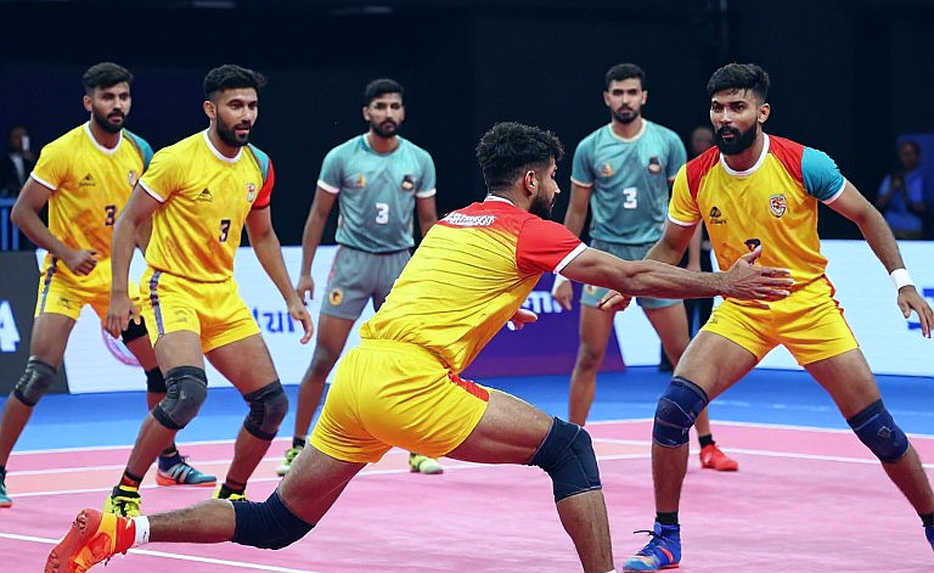
This primer matters because captaincy is not separate from these rules. In kabaddi the captain is not a ceremonial post. Which raider takes the do-or-die raid, when to call a TV review, when to burn a timeout, and how to change defensive calling from the corner — all four decisions have to be made on the mat, in real time, by one person. So the release's claim that the captain will "organise the team in high-pressure situations" is not filler. It is the actual job description.
The Surjeet-Naveen split is not new, and that is the point
I went back to the Jakarta thread to find the rule everyone now repeats — the year India lost the group game 23-24 to South Korea and the semifinal 18-27 to Iran. Campus threads called it betrayal. I opened the tackle logs and wrote that it was physics, not treachery. That same year I set a rule for myself: hot take first, receipt second, and never a pile-on against a player.
Surjeet Singh is a defender, and a defender-captain is structurally coherent in kabaddi. A corner defender sees the whole mat, keeps the do-or-die clock in his head, and runs the defensive rotation. Defence is the unit that needs real-time coordination, which is why defensive captains are common in this sport. Pairing him with a raider of Naveen Kumar's profile as vice-captain is the standard "discipline plus firepower" split.
I am underlining this because the release presents it as an innovation, and it is not. It is a sound selection. Calling a sound selection a revolution is an organiser's habit, not a reader's.
This is where Naveen Kumar's tactical importance surfaces. If he is deployed as a deep, bonus-line raider, his value is not only touch points. Attacking the bonus line against a full-strength defence forces that defence to spread, and a spread defence opens tackle angles on the next raid. The release's claim that individual raids shift momentum is tied to this machinery, not to a magic moment. I like that the claim can be explained through rules. I do not like that the release never named the rules.
The question the release did not ask: whose championship is this?
Kabaddi has never been part of the Commonwealth Games programme, including the reduced 10-sport programme confirmed for Glasgow 2026. That is a checkable fact, and it immediately turns the word "Commonwealth" into a question.
There are two routes. One, this is a championship affiliated to an international kabaddi federation, with Commonwealth member federations participating. Two, this is a promoter-run event borrowing the brand. I cannot call either one true, because the release never names the sanctioning body. That is the single most important unstated fact in the entire story.
A tournament's status is not set by its name; it is set by its sanction. If this is an officially affiliated championship, it is a genuine international cap series for India and it carries weight. If it is a promoter event, it is an exhibition and should be read as one. Readers deserve that distinction, and the release withheld it — perhaps not deliberately, perhaps because sanction details take effort to send while a captain's name generates clicks.
I am not alleging a plot. I am naming an incentive. In the attention economy of coverage, the name always travels faster than the paperwork.
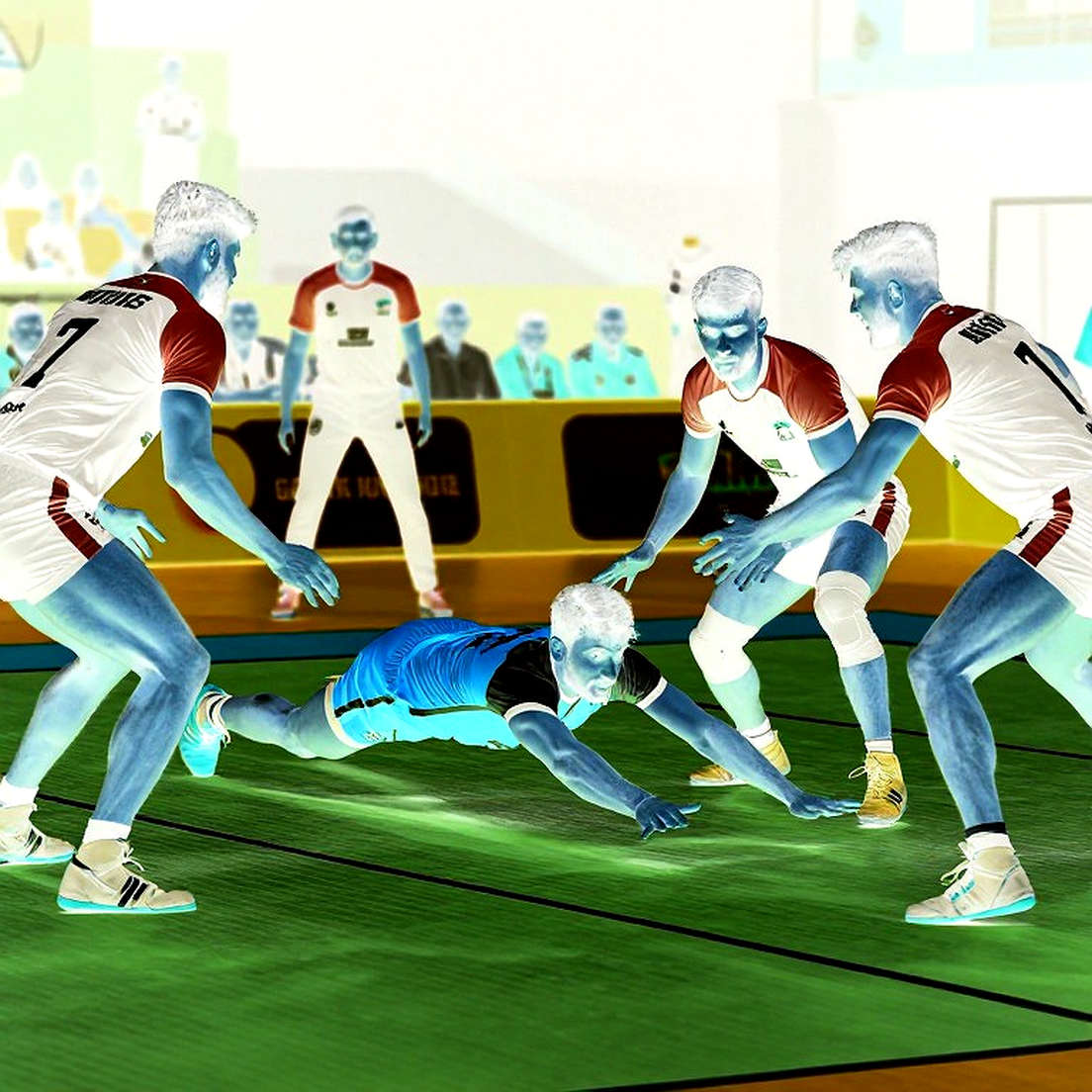
The second unanswered question is the rule variant. The release assumes Standard Style but never states it, and that silence could be expensive. If teams representing Pakistan, the UK and Canada's diaspora turn up, Circle Style kabaddi becomes a very real possibility — the circular field, one-on-one offence and defence, the rural Punjab tradition. Circle Style scores differently and rewards a completely different athlete profile. If two codes meet inside one tournament, the meaning of Surjeet's captaincy changes, because the corner-calling mechanism that defines Standard Style defence does not operate the same way.
I am stretching this paragraph because I have made this mistake before. In 2026, behind closed doors at Chhatrasal Stadium, I worked as a stats operator at a Haryana Police versus Delhi Police exhibition. There were no spectators. I logged 23 empty raids in 40 minutes and noticed raiders hesitating at the baulk line without crowd noise. After that piece I set another rule: before I trust an empty-raid metric, I count the empty seats first. Empty stands at Chhatrasal are not atmosphere; they are a measurement problem. The blank spaces in this release are the same thing — they measure how little we actually know about this event.
What is a receipt and what is not
At the 2026 PKL auction I live-threaded Telugu Titans' Rs 2.605 crore bid for Pawan Sehrawat, then a league record. Most accounts called it a title-winning move. I set his 304 raid points from the previous season against Telugu Titans' defensive gaps and wrote that the price had made him a saviour before he had a single corner defender. My headline: the most expensive raider cannot tackle for you.
The Rs 2.605 crore auction thread is a receipt, not a saviour story. Since then I have split every kabaddi story into three parts: price, role, and supporting cast. That format is still my filter, and applied to this release it works instantly.
Price: there is none here. No fee, no contract, no tenure. In the middle of a transfer window, when every other story is about fees, release clauses and wage bills, an international appointment arriving without a single contractual detail tells you the transparency mechanism for contracts simply does not exist in this corner of the sport.
Role: clear enough. Defensive discipline and mat management from Surjeet, attacking tempo from Naveen. The division is sound.
Supporting cast: entirely absent. Evaluating a captain without knowing which six players surround him is an incomplete exercise. This is where I draw the player-protective line: Surjeet and Naveen cannot be asked why the squad list did not appear. That question belongs to the organiser and the selectors. Separate the person from the incentive every time — what did the system reward, and what could the player actually control?
Where I could be wrong
Three places.
First, the "back-to-back titles" line may be correct and the "inaugural edition" line may be the error — meaning a prior Commonwealth Kabaddi Championship existed and whoever wrote the release did not update the template. If so, the event's prestige tier rises a notch and the "new addition to the calendar" framing collapses. I have not endorsed either reading, because the source prints both and no document for a previous edition exists in front of me. No paper trail exists. I stop there.
Second, the "Commonwealth" brand may be entirely legitimate and my suspicion unfair. If the organisers are affiliated to a recognised federation and the sanction document is public through another channel, then saying "the sanction is unstated" would be technically true and substantively incomplete. So I shrink the claim: this release does not state the sanction. It does not say there is none.
Third, and most importantly, this release may simply be thin because squad confirmation is still pending, and I may be reading an ordinary process gap as a pattern with intent. That is my biggest risk, because thread-tracing is so satisfying that a pattern starts to look like a plan. I stop myself here: name the incentive, not the villain. The incentive is that a captaincy story is cheap and a squad document is expensive. Nothing more.
What to watch next
My prediction is specific and testable. Before the first whistle, four things should be public: a 12-name squad list, a declared rule variant with the rulebook edition named, an official statement from the sanctioning body, and the list of competing nations. If the squad list still does not carry a head coach and a selection committee, the claim of a "process" dies on its own.
And my guess is that most coverage will be about the Surjeet-Naveen pairing, not the sanction. If that happens, it confirms that Indian kabaddi's coverage economy still puts names above paperwork — and until it stops, we will keep watching every new championship without knowing what tier it actually belongs to. Surjeet Singh and Naveen Kumar will do their jobs. The question is whether we do ours.