
Sindh's First Gold and 32:32.40: The Missing Paperwork in Pakistan's Race Walking
**मुख्य उत्तर (≤60 शब्द)**: महनूर ने 54वीं राष्ट्रीय एथलेटिक्स चैंपियनशिप की महिला 5,000 मीटर रेस वॉक 32:32.40 में जीतकर सिंध को पहला स्वर्ण दिलाया। यह 6:30.5 प्रति किलोमीटर की गति है, जो विश्व स्तरीय महिला वॉकरों से प्रति किलोमीटर डेढ़ गुना धीमी है और अंतरराष्ट्रीय मानक से काफ़ी दूर है। **मुख्य तथ्य**: - विजेता समय 32:32.40 (5,000 मीटर), औसत चाल 9.22 किलोमीटर प्रति घंटा। - पुरुषों की स्पर्धा 20 किलोमीटर पर हुई, महिलाओं की केवल 5,000 मीटर पर — आधार पतले होने का संकेत। - 5,000 मीटर वॉक विश्व एथलेटिक्स या ओलंपिक स्पर्धा नहीं है, इसलिए कोई एंट्री मानक लागू नहीं। - रिपोर्ट में लैप स्प्लिट, जजों के कार्ड, फ़ील्ड साइज़ और उपविजेता का समय नहीं दिया गया। - पुरस्कार राशि सभी स्पर्धाओं और पदकों को मिलाकर कुल नौ मिलियन रुपये रखी गई थी। **स्रोत**: The Express Tribune (अंग्रेज़ी दैनिक, पाकिस्तान); प्रकाशन तिथि अपुष्ट — लेख में केवल "गुरुवार" उल्लिखित है, और अर्शद नदीम के ओलंपिक स्वर्ण (5 अगस्त 2024) के उल्लेख से आयोजन उसके बाद का सिद्ध होता है। चैंपियनशिप संस्करण का वर्ष सत्यापन लंबित है। **संबंधित प्रश्नोत्तर**: प्रश्न: 32:32.40 का अंतरराष्ट्रीय स्तर पर क्या अर्थ है? उत्तर: यह विकास-स्तरीय घरेलू प्रदर्शन है; मौजूदा गति से 20 किलोमीटर पर लगभग 2 घंटे 10 मिनट बैठते हैं, जबकि पेरिस 2024 का महिला 20 किलोमीटर मानक 1:29:20 था। प्रश्न: रेस वॉक के परिणाम को अपुष्ट क्यों कहा गया है? उत्तर: क्योंकि यह परखने वाला खेल है और रिपोर्ट में तीन-कार्ड नियम से जुड़े जजों के कार्ड, लैप स्प्लिट और फ़ील्ड साइज़ का कोई विवरण नहीं है, जिससे तकनीकी वैधता सत्यापित नहीं होती। प्रश्न: आगे कौन-से आँकड़े दर्ज होने चाहिए? उत्तर: लैप स्प्लिट, जजों के कार्ड का सारांश, महिला वॉक का 10 किलोमीटर में विस्तार और सिंध से दूसरा प्रतिस्पर्धी नाम।
The results sheet carried one number — 32:32.40 — the winning time in the women's 5,000m race walk at the 54th National Athletics Championship, and in front of it a name: Mahnoor. Sindh's first gold. The headline stops right there: first gold, a province, a young woman, applause. I started with the names, not the noise, and then I took the number apart, because in this entire report the number was the only thing that was not incomplete.
Five kilometres in 32 minutes 32.40 seconds. That is 6 minutes 30.5 seconds per kilometre, an average speed of 9.22 km/h. Before going further, one thing must be entered into the record: the sheet carried no lap splits, no judges' cards, no field size, no runner-up time. I have read a great many of these sheets over the years. The empty ground kept a better record than the press box — here the ground is not even visibly empty; only the paper is.
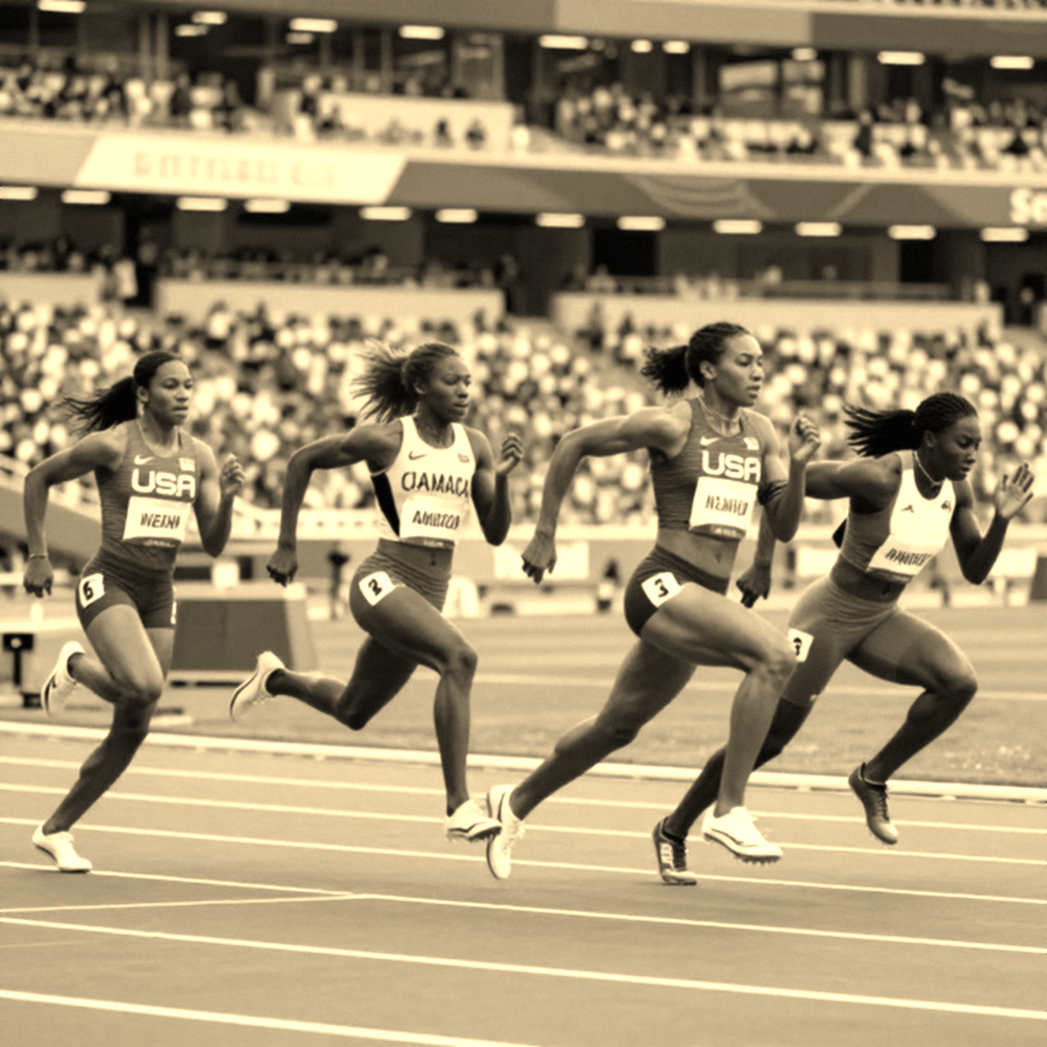
The report ran in The Express Tribune and carries no calendar date, only "Thursday." Arshad Nadeem is described as an Olympic gold medallist, so the meet necessarily post-dates 5 August 2026; the edition year of the championship remains pending verification. When a national championship cannot tell a reader its own date, the record-keeping is lagging behind the sport. In race walking that lag is the most expensive kind, because this is a discipline whose entire existence rests on the written record.
Two other facts are on file, and both matter. First, the total prize pool across all events and medals was Rs 9 million. That looks substantial by South Asian domestic standards, but divided across dozens of events and hundreds of athletes it leaves a modest sum per head. That is the real ledger: the money written under the medal, and what that money buys in tape, rent and food for the next six months. Second, the men walked 20km while the women's title was decided over 5,000m. That asymmetry is not decoration; it is a diagnosis.
Now the arithmetic without which this gold cannot be placed. Elite women walk 20km at roughly 4 minutes 18 seconds per kilometre. Mahnoor is at 6 minutes 30 — more than half again as slow per kilometre. And the shorter distance should flatter the pace, because fatigue accumulates less. Even over five kilometres, the mark sits several minutes outside South Asian junior benchmarks. This is a developmental-level domestic performance, not an internationally meaningful one.
Test it in the other direction. The 5,000m is not a World Athletics or Olympic event, so no entry standard hangs over the time — no qualifying wall, no pass or fail. Extrapolate the current pace to 20km and it lands near 2 hours 10 minutes. The Paris 2026 women's 20km standard was 1:29:20. That is roughly forty minutes of separation — not a gap to be closed by improvement, but a gap that marks entry into a different sport.
The shape of the programme tells you how thin the base is. Where the men contested 20km, the women's title was settled over 5,000m. Senior women's championship walking internationally is 10km or 20km. There are only two reasons to shorten a distance: not enough entrants to make a race of it, or a schedule that had to be compressed. Either way the message is the same — the base is thin, and a medal has been placed on top of that thinness.
One technical fact matters more than any of this, and the report omits it entirely. Race walking is not a measured discipline; it is a judged one. Three red cards from three different judges for loss of contact or a bent knee and the athlete is out. Mahnoor's cards, cautions, lap splits, field size and margin over second place are all absent. That does not mean the action was illegal. It means the legality of the technique and the competitiveness of the race are both uncorroborated. I have kept notebooks for twenty years, and against every such performance I have written the same line: verification pending.
It is also possible the women's 5,000m field was very small — single-digit entries, perhaps a lone starter. In that case 32:32.40 is not the result of a contest but the record of a solo training effort. The absence of any field size in the report does not dismiss that possibility; it feeds it.
Now the two lazy readings I have to hold myself back from. The first is to turn "Sindh's first gold" into a struggle-and-triumph story with no time, no split, no name. The second is to look at 32:32.40 and pronounce that it is nothing, that a domestic medal is a drum to beat. Both cheat the reader. There is a third possibility: this may be a junior or youth category folded into the senior programme, and if so, 32:32.40 is an entirely different animal that must be judged against junior standards, not senior ones. The report does not say. I cannot assume it, and I cannot rule it out.
One more possibility belongs on the record even with weak footing: the championship was inaugurated at 5pm, which suggests evening sessions were used to dodge the heat. If the walk was contested in heavy humidity, times compress naturally. That is an inference, not evidence — and I do not grant an athlete a discount on her time without evidence, because the habit of granting discounts once formed makes every results sheet generous.
What is most missing here is not a time. It is names. The trail begins where the academy bus turns off the main road. Which school ground produced Sindh's first gold, which district trial put her name on a form, which coach stood at the roadside at five in the morning, and how many months that coach has gone unpaid — not one of these questions is asked in the report. The ledger says more about a club than the trophy cabinet. A national championship's ledger tells you how much of that Rs 9 million reaches the coach who built the medal.
And note this too: the visibility of Pakistani athletics currently rests on a single name. Arshad Nadeem's javelin turned the cameras toward the sport, which is good news, but that light does not reach the race-walking route. When one athlete becomes the whole sport's front door, the remaining names keep walking quietly. Every pipeline has a leak; the story is who gets through — and for Sindh, that is Mahnoor. It is an achievement. The question is whether it is a system.
Looking forward, four things should appear on paper within twelve months. One, lap splits, so we know whether the pace held or collapsed in the last two kilometres. Two, a summary of judging cards, so the technical argument can end. Three, the women's walk extended to 10km, because the jump from 5,000m to 20km is not a development pathway but a wall. Four, a second name from Sindh. One gold can be a province's rare day; a second name is proof of a system.
32:32.40 is not the last page of anyone's career file. It is the first document — provided it is kept whole. The question is not whether Mahnoor can walk faster. The question is whether the federation that handed her a medal will, over the next four years, record her lap splits, her coach's salary and her district trial.