
Maddinson's Dive Made the Headline, but Hobart's Day Belonged to a 153-Run Stand
**मुख्य उत्तर**: शेफील्ड शील्ड राउंड 3 में होबार्ट के बेलेरिव ओवल पर तस्मानिया ने टॉस हारकर पहले बल्लेबाजी करते हुए पहले दिन स्टंप्स तक 5-335 रन बनाए। निक मैडिनसन का डाइविंग कैच हेडलाइन बना, पर दिन का निर्णायक हिस्सा ब्रैड होप (83*) और जेक डोरन (69*) की अटूट 153 रन की छठे विकेट साझेदारी रही। **मुख्य तथ्य**: - तस्मानिया 5-182 से 5-335 तक पहुंचा; छठे विकेट के लिए होप-डोरन की अटूट 153 रन की साझेदारी निर्णायक रही। - मैडिनसन ने 8 ओवर में 0-31 लिए; बल्लेबाजी की बारी नहीं आई; मिच ओवेन पहली गेंद पर कैच आउट हुए। - न्यू साउथ वेल्स ने पहले दिन सात गेंदबाज इस्तेमाल किए, सातवें विकल्प के रूप में पार्ट-टाइम स्पिन। - होप का स्ट्राइक रेट 57.2 और डोरन का 69.7; साझेदारी के 152 रनों में कम से कम 88 रन सीमा से आए। - चार दिवसीय मैच में फॉलो-ऑन की सीमा 150 रन है (लॉ ऑफ क्रिकेट, कानून 14)। **स्रोत**: cricket.com.au की मूल मैच रिपोर्ट “Maddinson snares a stunner but trio puts Tassie in control”; शेफील्ड शील्ड राउंड 3, प्रकाशन दिनांक सत्यापन हेतु लंबित। **संबंधित प्रश्न-उत्तर**: प्रश्न: क्या तस्मानिया का 5-335 स्कोर मजबूत है? उत्तर: स्कोर मजबूत है, पर वह 5-182 के बाद एक ही अटूट साझेदारी की बदौलत बना है, इसलिए दूसरे दिन की पहली सुबह ही इसका असली मापदंड होगी। प्रश्न: निक मैडिनसन की टेस्ट वापसी की संभावना क्या है? उत्तर: 34 वर्ष की आयु और कैमरन ग्रीन-जोश इंग्लिस की फिटनेस वापसी के बाद उनका रास्ता रनों से होकर जाता है, एक शानदार कैच से नहीं। प्रश्न: फॉलो-ऑन लागू करने की सीमा क्या है? उत्तर: चार दिवसीय प्रथम श्रेणी मैच में 150 रन, जबकि पांच दिवसीय टेस्ट मैच में यह सीमा 200 रन होती है।
The cup of tea in the Bellerive Oval press box was going cold. From the ground came the sound that is first-class cricket's true rhythm — ball thudding into pitch, bat meeting ball, a scattering of applause from the far stands. That monotony had run for four hours, and the match's story was hiding inside it. Then the sound broke. Mitch Owen was facing his first ball. It took the outside edge and looped towards square leg, and Nic Maddinson, 34 years old, threw himself into the dive that made the ground hold its breath for a second. The catch was taken. Owen, first ball, nought.
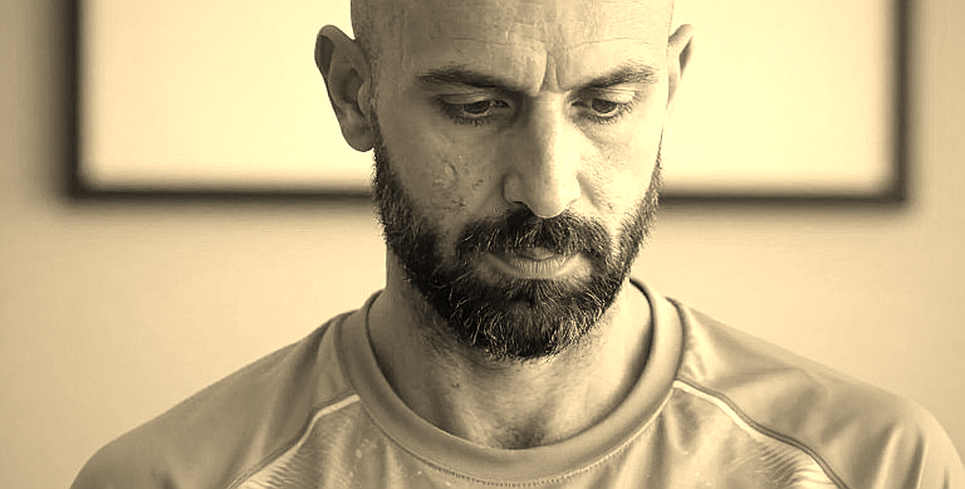
The photographers had their frame and the next morning's paper had its headline. Cricket Australia's report reads the same way — “Maddinson snares a stunner but trio puts Tassie in control.” Yet at stumps that evening the board said 5-335. The catch lasted four seconds. The day lasted six hours. In my notebook they do not get equal space.
Round three of the Sheffield Shield, Tasmania against New South Wales at Bellerive Oval, Hobart. Tasmania lost the toss and were sent in. Being asked to bat first in a four-day game is the moment a captain does arithmetic in his head — when will the seam movement dry up, who bowls the middle overs, will this surface ease for batting on days three and four. Hobart's pitch carries a reputation for helping the quicks. That day, after the first hour, the Kookaburra did not appear to be doing a great deal. That is inference, not something the report states — so let it stay an inference.
Tasmania's top order made starts and did not turn them into scores. Teague Wyllie 64, Caleb Jewell 46, Jordan Silk 37 — three good innings, not one hundred among them. Silk was lbw to Abbott and the score at that point was 5-182. Three batters began the work and three left it unfinished. One line here is worth recording — Wyllie has come across from Western Australia and this is his first half-century for his new state. That quiet traffic of players between states is the unglamorous machinery of Australia's domestic structure, and no transfer fee hangs on it.
Then came the sixth wicket and the day turned. Brad Hope 83 not out off 145 balls, Jake Doran 69 not out off 99. A partnership of 153, unbroken. Hope's strike rate 57.2, Doran's 69.7. One held, the other pushed.
Here is the detail the scorecard does not tell you. Add 83 and 69 and you get 152, yet the stand is recorded at 153 — meaning one extra, a bye or a leg-bye, sits inside that account. A small thing, but small things tell you how clean the report in your hands actually is.
The real question is how those 153 runs were made. Had both batters simply stood and blocked, the strike rates would sit near 30 and the side might not have reached 335 at all. What is available makes it clear that at least 22 fours — 88 runs — came off the bat inside that stand, close to 58 per cent. In first-class cricket, rescue partnerships normally run 40-55 per cent boundary share. This was not an innings of survival by blockade; it was recovery while scoring. New South Wales were being taken for runs even during the “recovery.” The team run rate for the day was roughly 3.7 an over, above the 3.0-3.4 first-day Shield par.
In 2026, at Bengaluru, I watched Mayank Agarwal make 171 and understood something that day — first-class cricket's story hides in the middle overs, not at the edges of the scoreboard. Hobart was the same.
And that is where my eye moves off the catch and onto the bowling figures. New South Wales used seven bowlers on day one and brought on a part-time spinner as the seventh option — Maddinson, whose quota read 8 overs, 31 runs, no wicket. Needing seven bowlers on the first day of a four-day match means one thing: there is no route to a wicket in your hand. That is not captaincy cleverness, it is structural compulsion. An injured frontline spinner, a seamer rested, or a surface on which nobody can do anything — whichever the cause, the consequence is identical. Ranji or Sheffield Shield, I have seen this pattern repeatedly: the side that reaches for a seventh bowler on day one walks into the second innings carrying the same question.
One line in the report about Jake Scott says a great deal — that he had the most luck. Both his wickets came from an edge and a return catch. The bowler who was beating the bat is not being fully described by his figures. That gap between process and result is exactly what confuses selectors most.
As for Maddinson, that catch is the engine of the headline, but the road back into the Test side runs through runs, not catches — and on day one he did not face a ball. The report gives his Test window: 48, 0, 0, 8 — 56 runs in four innings at 14.00. A four-innings sample proves nothing and disproves nothing. Two of those deliveries could have been unplayable and that 48 could have come off the edge. Building a “finished” or a “recalled” thesis on this sample is dishonest either way.
What is least said is that Tasmania's “control” rests on the guarantee of one partnership, not on the team's structural strength. The journey from 5-182 to 5-335 shows the top order can fall together. If two wickets go early on the second morning, the innings folds around 380 and the match opens again. The talk in the report of nudging 500 is a possibility, not a promise.
Maddinson's “axed Test opener” tag is at least a decade old — a narrative average lifted from an earlier news cycle, not a current data point. And the news that Cameron Green and Josh Inglis have regained fitness ahead of the third Test means, straightforwardly, that Maddinson's queue has got longer, not shorter. At 34 that queue shortens only through injury, not through form. At 34 this pause is not a full stop, just a breath — but a breath needs runs, and those are still to come.
The most honest line in the entire report belongs to Wyllie himself — that things have not quite gone to plan this season. A half-century is worth celebrating, but when a player is being that straight about himself, any “breakout” frame collapses in the same sentence.
The first session of day two is the real verdict on this innings. In a four-day match the follow-on threshold is 150 runs — in a five-day Test it is 200 — so Tasmania's realistic 450-500 target would put a 300-350 mountain in front of New South Wales simply to avoid batting again. That mountain only rises if Hope and Doran come through that morning.
The pitch is a poem only after you hear who is missing. What was missing at Bellerive that evening was a frontline spinner — the option that could break a stand on a tiring surface. And that absence will decide whether this match belongs to Tasmania or to nobody.