
Workload Management: The Biggest Administrative Crisis in Modern Cricket
कार्यभार प्रबंधन (वर्कलोड मैनेजमेंट) का अर्थ है खिलाड़ी के खेलने, प्रशिक्षण और आराम के बोझ को इस तरह संतुलित करना कि प्रदर्शन अधिकतम हो और चोट का जोखिम कम। यह आधुनिक क्रिकेट में इसलिए सबसे बड़ा प्रशासनिक मुद्दा बन गया है क्योंकि तीन अंतरराष्ट्रीय प्रारूपों के साथ आईपीएल, बीबीएल, द हंड्रेड, एसए20, आईएलटी20, एमएलसी और पीएसएल जैसी फ्रेंचाइज़ी लीगों ने कैलेंडर को लगभग बारह महीने भर दिया है। सबसे अधिक जोखिम तेज़ गेंदबाज़ों और ऑलराउंडरों को है, क्योंकि उनके शरीर पर दोहराव वाला भार सबसे अधिक पड़ता है। समाधान तीन स्तरों पर है—अंतरराष्ट्रीय कैलेंडर में अनिवार्य रिकवरी विंडो, केंद्रीय अनुबंधों में खेल-दिनों की ऊपरी सीमा, और निर्णय-प्रक्रिया में खिलाड़ी संघों की वास्तविक भागीदारी। संक्षेप में: कार्यभार प्रबंधन केवल चोट रोकने का उपाय नहीं, बल्कि खिलाड़ी के करियर और टेस्ट क्रिकेट की दीर्घकालिक गुणवत्ता की गारंटी है।
Cricket is passing through the densest international calendar in its history. Three formats—Test, ODI and T20—alongside a growing number of franchise leagues worldwide have created a scenario in which a top player spends eleven months of the year either on the field or in transit. The sharpest impact of this expansion has fallen on what the cricket world calls 'workload management'. Once an internal team-management matter, it is now the direct point of friction between boards, league organisers, player associations and broadcast rights holders.
The root of the problem is arithmetic. The ICC's Future Tours Programme is already packed with bilateral series, and on top of it every board prioritises its own domestic franchise league. The IPL in India, the BBL in Australia, The Hundred in England, SA20 in South Africa, ILT20 in the UAE, MLC in the USA and the PSL in Pakistan—the list grows every year. Window management between these leagues has become the single biggest bottleneck in the international calendar, because the same player is offered the choice of playing on three different continents in the same month.
The heaviest price is paid by fast bowlers. The physiology of pace bowling is brutal: every delivery places repetitive stress on the back, shoulder, knee and ankle, and the recovery time required is several times that of batting. Back stress fractures, side strains and ankle injuries are the product of exactly this repetitive overload. Jasprit Bumrah is the clearest example—a back injury kept him out of the 2026 T20 World Cup entirely, and his return afterwards was managed in a carefully staged manner. Jofra Archer's recurring elbow and back problems are proof that talent alone is not enough; the body needs as much time as the technique does.
There is a second dimension to the pressure on fast bowlers—selection. When a bowler plays all three formats continuously, subtle declines appear in his pace, line and rhythm that do not show up immediately in the numbers. That decline later manifests as a major injury. This is the principle at work in the management of bowlers like Pat Cummins and Kagiso Rabada—they are not used in every series, but at full capacity in selected important ones.
It would be a mistake to assume batters are free of this pressure. Physical fatigue is less visible in batting, but mental fatigue is just as real. Constant bio-bubbles, travel, distance from family and the demand to perform in every match combine to erode a player's concentration. Rishabh Pant's long road back after his car accident is an example of how recovery is not only physical but mental. When players like Joe Root play Test cricket continuously their value rises, but fielding them in every format is a long-term loss for the team.
All-rounders are in the least secure position. They are expected to both bowl and bat—a double load on the body and a double responsibility on the mind. Hardik Pandya's career is a long experiment in managing exactly this double load; his bowling volume is deliberately capped so that he remains available as a batter. Ben Stokes retired from ODI cricket in 2026, reversed that decision for the 2026 World Cup, and then stepped away from ODIs again—showing that the modern cricketer is being forced to choose between formats, and that choice is often emotionally expensive.
This is where the league-versus-country conflict begins. Trent Boult's decision to give up his New Zealand central contract is the most discussed example of this friction. When a few weeks' franchise contract exceeds a player's annual central income, the board's moral leverage weakens. Boards respond through the conditions attached to the No Objection Certificate—some impose blanket bans on certain leagues, some add conditions based on a player's age or contract status, and some quietly compromise.
One fact is often lost in this debate: workload management is not merely an injury-prevention measure but a strategy for maximising performance. England kept their fast bowlers fresh through rotation for years, Australia set clear priorities between home and away tours, and New Zealand, despite being a small nation, struck a precise balance of player availability within limited resources. The common thread across all three models is transparency. When a player knows in advance which series is his priority and in which he will be rested, discontent falls.
Technology has brought a major change in this area. GPS tracking, heart-rate monitoring, sleep data and the acute-to-chronic workload ratio are now available to the staff of many teams. The problem is that having data and using it correctly are two different things. Often data is collected only to produce reports, and the decision ultimately rests on the captain's and coach's instinct. Until data is tied directly to selection policy, it remains only a document.
The most serious long-term consequence falls on Test cricket. Test cricket is the format with the highest workload and the lowest revenue. When a fast bowler earns more in two weeks of a T20 league than he does in a month of a Test series, his inclination naturally tilts towards leagues. The World Test Championship has given the format a structure, but that structure does not reduce the load on players' bodies.
The way forward is clear at three levels. First, the international calendar must include mandatory recovery windows that no league can occupy. Second, central contracts should set an upper limit on a player's playing days, so that workload management is not merely a captain's personal decision. Third and most important, player associations must have genuine participation in decision-making, because the owner of the body on which this entire structure rests has so far been heard the least.
Cricket's commercial expansion is not going to stop. The return of cricket to the 2028 Los Angeles Olympics signals that the sport will become more global, and more global means more matches. The question, then, is not whether the calendar will grow—it is whether the growing calendar will leave the player enough room to survive in it. Workload management is not a technical term; it is the most basic quality guarantee of this sport.
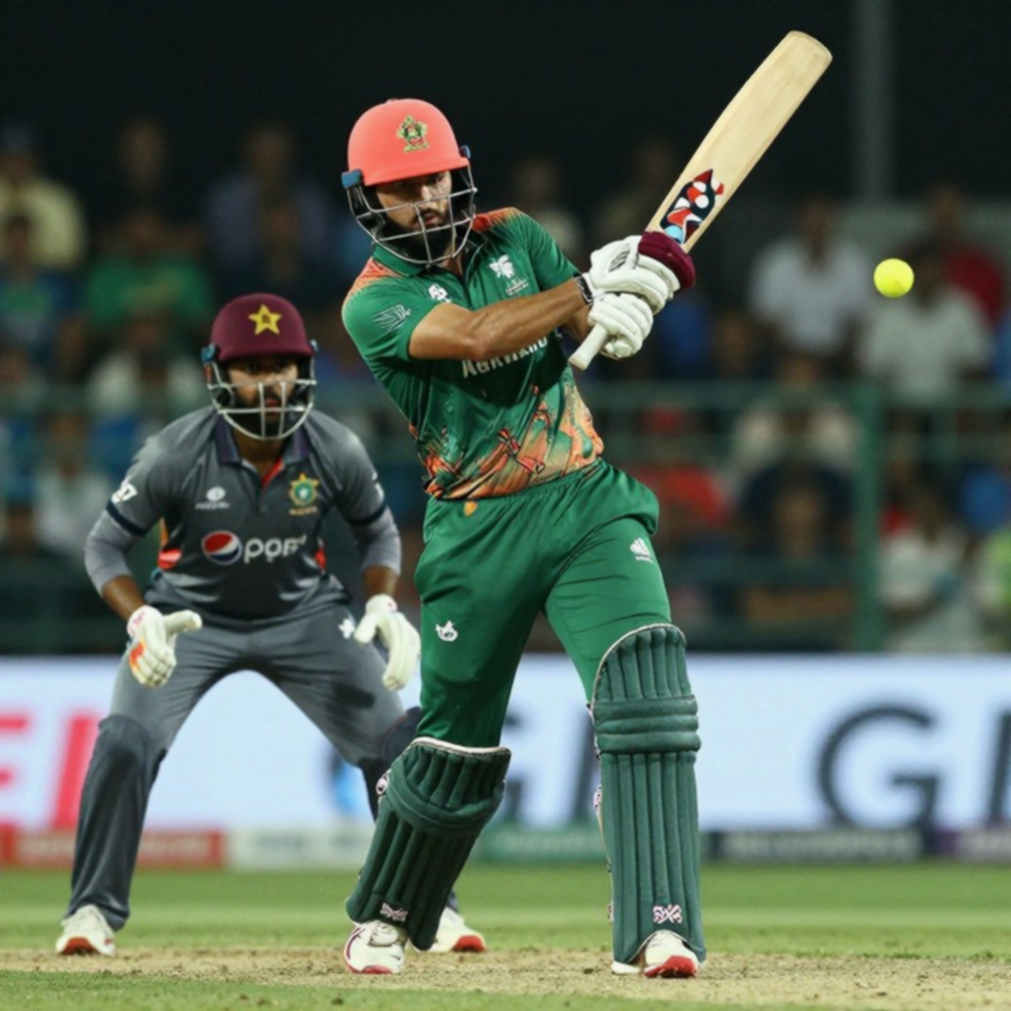
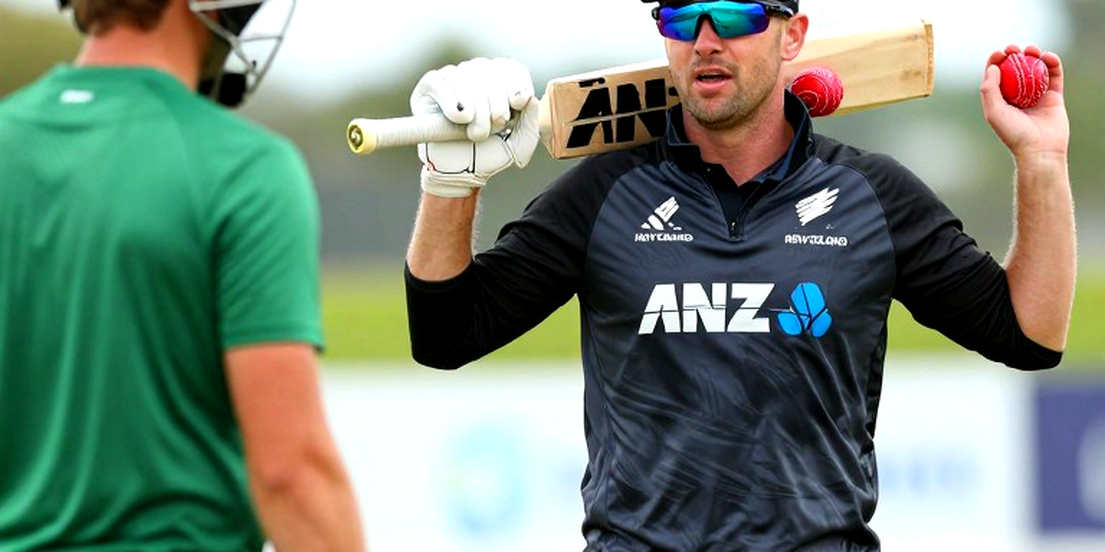

संबंधित खिलाड़ी
अनुशंसित
Dhaka's Shaved Grass and Sylhet's Question: The Real Arithmetic Behind West Indies' Win2026-11-01
Travis Head's 'Slow-Burn' 121 and Australia's Top Order: A Scorecard Audit Before the Cape Town Decider2026-10-30
Mumbai Indians' New Coaching Unit: Robin Uthappa Named Batting Coach as Staff Takes Shape Before December 16 Goa Mini-Auction2026-10-31
Bombay 2026, Australia's Ten Men: Norm O'Neill's Stomach Ache and the Unfinished History of Substitution Law2026-10-22
Litchfield's Return and Australia's First Toss Loss: How Dew at North Sydney Oval Rewrote the Match Equation2026-10-22
अनुशंसित
Harvey and McSweeney Keep South Australia Alive in 422 Chase Against Western Australia2026-10-31
India's Test Caps 217 and 218: One Quiz, Four Excluded Pairs, and the Unaudited Drawer of Cricket Data2026-10-25
Fleming's 'Key Assets' Line: England's Real Story Is Rotation, Not a Coaching Passport2026-10-22
Blow for Bangladesh before Sylhet Test: Mominul Haque doubtful after head injury, Jaker Ali named concussion substitute2026-10-31
WBBL Match 3: Brisbane Heat vs Sydney Sixers — The Case Beyond the Coin Toss2026-10-31
The Discipline of the Empty Notebook: Why 'Insufficient Information' Is Cricket Analysis's Most Honest Answer2026-10-30
अनुशंसित
Steve Smith's 28 Amid 11,000 Test Runs: The Record, Australia's Batting and the Workload Ledger2026-10-30
240 Runs, Nine Wickets and One New Ball: Harvey–McSweeney Stand Rewrites the Sheffield Shield Arithmetic at Adelaide Oval2026-10-30
Babar's Form No Concern? Pakistan Coach's Claim and the Silence of Data2026-10-29
Boland's Seam, Bavuma's Resistance and the Rain Clock at Gqeberha2026-10-22
The Empty Annexure: 41 Fields, Zero Facts, and the Cricket Record That Cancelled Itself2026-10-28
'A learning curve': Iyer says India still adapting to NZ grounds after Eden Park drubbing2026-10-31