
European Club Cup: A 2715 Average Wins Tiebreaks, Not Matches
**मुख्य उत्तर**: यूरोपियन क्लब कप 2026 के ओपन वर्ग में 108 टीमें हैं और दो राउंड के बाद 25 टीमें पूरे अंकों पर हैं, जिनमें शीर्ष पांच टीमें राउंड तीन में आमने-सामने हैं। बायेगान का 2715 औसत फ़ील्ड में सबसे ऊंचा है, लेकिन एलो गणित के अनुसार 2600+ प्रतिद्वंद्वियों के ख़िलाफ़ उसकी अपेक्षित बढ़त प्रति मैच आधे बोर्ड अंक से कम है। **मुख्य तथ्य**: - ओपन वर्ग में 108 टीमें, महिला वर्ग में 22 टीमें; प्रति मैच छह बोर्ड, सात राउंड का स्विस फ़ॉर्मेट। - बायेगान एकमात्र टीम है जिसका औसत 2700 से ऊपर (2715) है; चार अन्य टीमों का औसत 2600 से ऊपर है। - दो राउंड के बाद 25 टीमें 2/2 पर; इनमें पांच शीर्ष टीमें राउंड तीन में एक-दूसरे के सामने हैं। - एलो सूत्र से बायेगान का अपेक्षित स्कोर 2600 टीम के ख़िलाफ़ 3.96/6 और 2650 टीम के ख़िलाफ़ 3.55/6 बोर्ड अंक। - वेई यी का नाम मूल ब्रीफ़ में केवल फोटो कैप्शन में है; कोई लाइनअप, बोर्ड ऑर्डर या गेम स्कोर प्रकाशित नहीं है। **स्रोत**: यूरोपियन क्लब कप पर आधारित वायर-शैली ब्रीफ़, प्रकाशन तिथि 19 अक्टूबर 2026। एलो अपेक्षा गणना लेखक की स्वयं की है, मूल स्रोत का हिस्सा नहीं। **संबंधित प्रश्न-उत्तर**: प्रश्न: राउंड तीन में कौन-कौन सी टीमें आमने-सामने हैं? उत्तर: ब्रीफ़ में टीमों के नाम नहीं दिए गए हैं; यह केवल बताया गया है कि 2/2 वाली 25 टीमों में शीर्ष पांच एक-दूसरे से भिड़ रही हैं। प्रश्न: बायेगान को फेवरेट क्यों कहा गया है? उत्तर: क्योंकि 2715 का औसत फ़ील्ड में सबसे ऊंचा है और 2700 से ऊपर औसत रखने वाली यह अकेली टीम है। प्रश्न: क्या 2715 का औसत ख़िताब की गारंटी है? उत्तर: नहीं — छह बोर्ड और 3.5 अंक की जीत की शर्त पर यह बढ़त 2650 स्तर के प्रतिद्वंद्वी के ख़िलाफ़ घटकर लगभग 3.55 बोर्ड अंक रह जाती है।
Before the round-three pairing sheet goes up on the wall, the hall makes a sound that is nothing like a stadium. Tape peeling, then a hundred-odd heads tilting down together. I have watched that morning at club events for years: a coach in the corridor holding a coffee gone cold, reading his team's name three times — not because he has forgotten it, but because he wants to see that the board order printed is the one he fixed at two in the morning. The arbiter's pen hovers over the scoresheet for a few seconds. Those three seconds never reach a stream.
On the morning of 19 October 2026, the top of the European Club Cup's round-three sheet was already settled by a number: 25 teams on 2/2. Five of those 25 are the names that sat at the top of the entry list. The favourites meet each other in round three. The wire brief disposed of it in a line, and honestly, the line is not wrong. The real question starts after it: in a field of 108 teams, how much of an edge does Bayegan's 2715 average actually buy? The answer is not the one the headline implies.
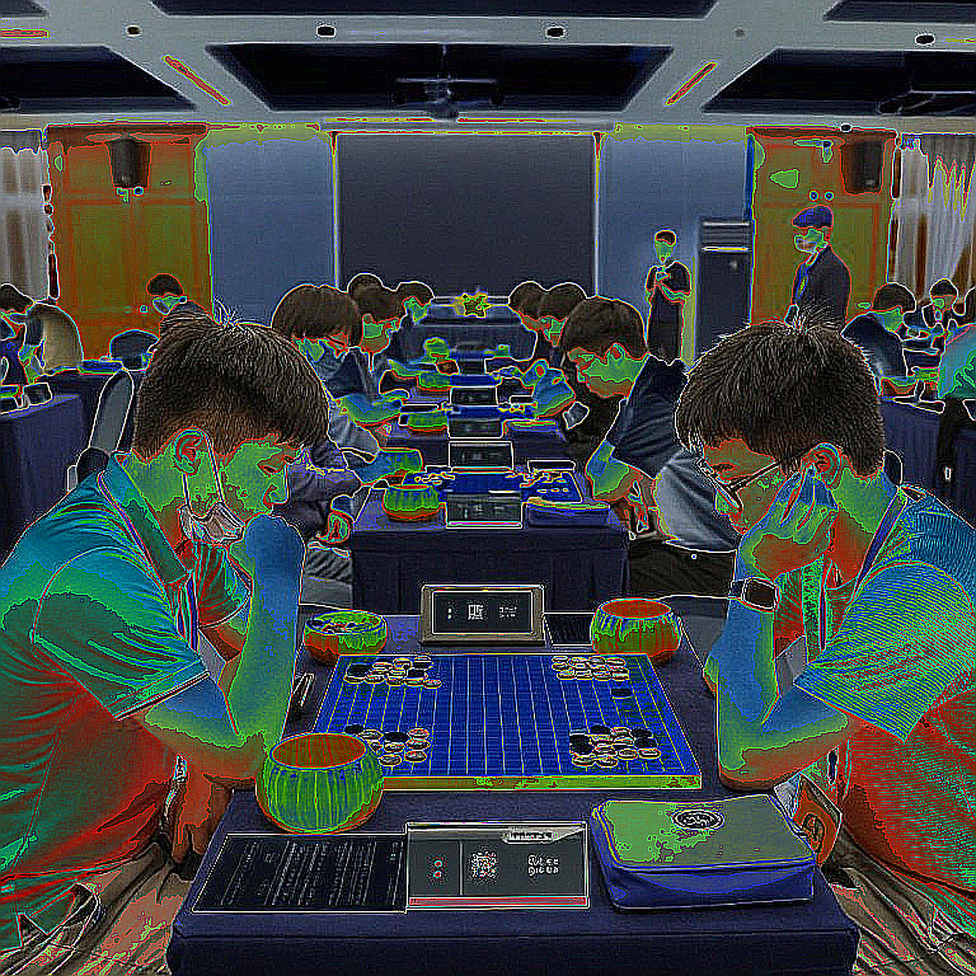
Context: which numbers are records, and which is an opinion
The base figures first, because every argument about this tournament rests on them. 108 teams in the open section, 22 in the women's. Six boards per match, which means the open section alone plays 648 boards in a single round. A match needs 3.5 board points to win, and over seven rounds of Swiss the title usually lands around six or five-and-a-half wins. On rating: Bayegan averages 2715, the only team above a 2700 average, with four teams behind it averaging above 2600.
The first operational truth hides there. A 108-team field means a large part of the tournament is wrestling with a question the ratings do not answer — how to set the board order. In a six-board match, whether your three strongest players sit high or low changes the arithmetic of the match. This is where club chess stops being the same sport as an individual tournament.
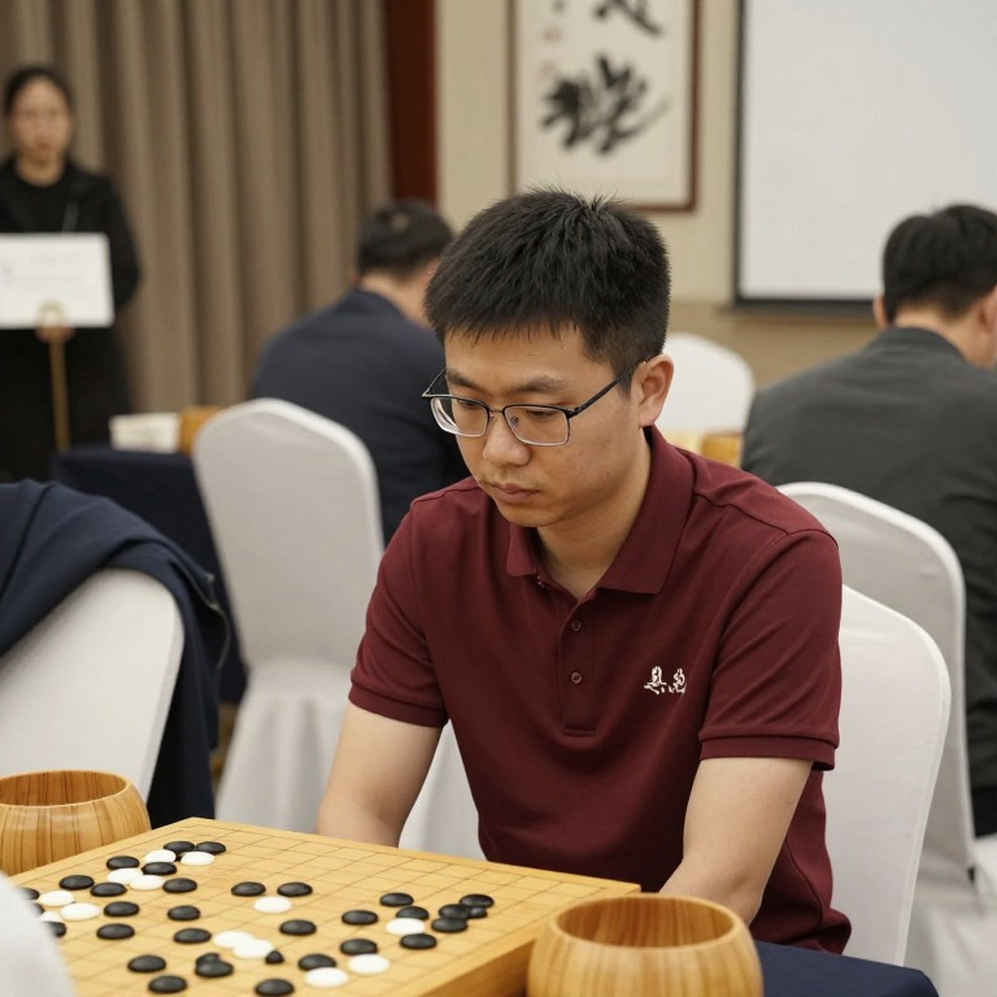
Now the part that is missing, and the gap shapes everything. There is not a single game in the source material. No opening, no move number, no engine line, no published board order. One player is named — Wei Yi — and only in a photo caption, in an Alkaloid context. Beyond that caption there is not one word on his form, his results or his role. Any player analysis written on top of this will not be analysis of this tournament; it will be knowledge carried in from outside.
What does hold up is the arithmetic. 108, 22, 2715, 2600, 25 — those come from entry lists and score groups, which makes them records rather than commentary. The commentary is one word: favourites. I treat that as the author's opinion, and so I test it with maths instead of trust.
Core: what the maths says
Applying the standard Elo expectation formula E = 1/(1+10^(−/400)) gives the following. This is my own computation, not part of the brief, and it uses only the averages stated in the entry list.
| Matchup (per board) | Rating gap | Expected score/board | Expected board points over six | Match lean | |---|---|---|---|---| | Bayegan (2715) vs a 2600-average team | 115 | ≈0.66 | ≈3.96 / 6 | Strong (3.5 needed to win) | | Bayegan (2715) vs a 2650-average team | 65 | ≈0.59 | ≈3.55 / 6 | Moderate to strong | | Bayegan (2715) vs a ~2400 mid-field team | 315 | ≈0.86 | ≈5.16 / 6 | Overwhelming |
The third row makes it look as though there is no contest at all. The first two rows say the contest exists and lives inside a very small space.
A 2715 average does not deliver 6-0 over six boards; it delivers an expected 3.96. Against a 2650 side that same figure falls to 3.55 — five hundredths of a point above the winning threshold. One draw, one slip on board five, one bad move in time trouble, and the match is drawn. A draw is not a defeat in team chess, but in a Swiss it takes half a point off your title pace.
Measured against an even match of 3.0, Bayegan's edge is roughly half a board point to a board point per match. That reads as strong until you remember board points are produced by six different players, six different psychologies and one captain's decision. On paper it is an edge. On the board it is a probability.
From 108 to 25: the Swiss arithmetic
Where the 25 came from is itself the story. 108 teams, 54 first-round matches, so 54 winners. In round two those 54 split among themselves — 27 matches. If every match had been decisive, 27 teams would sit on 2/2. In fact 25 do. The difference is two teams, and it tells you one match in that score group was drawn, because a draw leaves both teams short of a full score.
Which means the round-three pairing is not an organiser's contrivance. The Swiss system pushes the five strong teams into the same bracket on its own, because that is where they have arrived. The headline's direct encounter is a consequence of the format, not a favour from the hosts.
One more thing becomes visible here. Two rounds means a two-match sample per team. Twenty-five of 108 teams sit on the same score; nothing about form can be inferred from that. All we know about the teams meeting in round three is that they won twice, as 25 teams did.
Boards three to six: the actual battlefield
Team-match chess hands the underdog a gift by design: close the lower boards and ask for 3-3. A 2450 side facing a 2715 average knows there will be no miracle on board one. Its entire budget goes to boards four, five and six — solid openings, early draws, a relieved captain. The favourite's difficulty is not winning on board one; it is converting +0.4 on board five into a full point.
I have watched this dynamic up close on a track. The 400 metres is one athlete's job; the 4x400 relay belongs to four, and the fastest runner is often not on the winning team. Races are decided at the handover — the half second in which the third leg loses or saves momentum. Boards three to six are that handover zone in club chess. Board one takes the headlines; the lower boards decide matches.
A concrete consequence: captaincy matters more here than individual strength. Who gets white on which board, who is licensed to draw, who has to win — that allocation happens before the first move. If the board-six player understands that the team needs a draw from him, his style changes. No individual tournament grants that permission.
And this is where the risk sits that no scoresheet shows: consultation and captain-coaching pressure. One error becomes six people's error, and the weight of it travels with the team into the next round. Nothing of the sort is reported here, so read this as a structural characteristic, not an allegation.
One average, several faces
2715 is a number, not a team. A six-board average of 2715 can be built several ways — one 2780 superstar plus five players around 2700, or six players bunched between 2710 and 2720. The two teams are identical on paper and behave nothing alike on the board.
The first almost guarantees a point on board one and scrambles lower down. The second takes a small edge on every board and blows nobody away. Over seven rounds of Swiss, the second shape is more reliable because it does not depend on one player's bad day. Which shape Bayegan has cannot be settled from this report — no lineup is published. That is precisely where the favourite claim is weakest.
Twenty-two women's teams: the clearest pipeline signal
The open section has 108, the women's section 22. A five-fold gap is not a one-year accident; it is the mark of a structure. Women's club teams come out of the same clubs that send open teams, but the number contracts at the point where the question becomes a second sponsorship and a second six-player roster.
I read this through the operating layer I spent years working inside in India. Tamil Nadu's machine is logistics, not magic — Velammal's school pipeline, the Tal Chess Club lineage, state cash awards, jobs at ONGC and Indian Railways. Talent is that machine's output, not its explanation. Any champion story that skips the invoice is half a story.
European club chess does not pay its invoice out of a state award. It pays out of a patron's name, and here the team name is often the patron's name. That small operational fact explains the politics of the whole event: a club with a patron can send a women's team as well; a club without one sends a single team and stops. The 22 is the product of that gap, not of a shortage of talent.
What the monitor does not show
648 boards in one round. That means hundreds of scoresheets, dozens of arbiters, hands checking clocks, and a hall in which six hundred people are calculating a next move at once. On the stream you get the clock and the eval bar. The monitor never tells you what the hall smells like — coffee, wet plastic bags, the warm-clothing fug that fills the room by the third hour. It does not show you the coach standing in the corridor, or the parent in the lobby checking a bank balance.
That absence is the biggest hole in the coverage. When a team walks into round three as the favourite, it does not carry a paper average with it. It carries six people's sleep, the captain's decision from the previous night, and the half hour the board-six player spent rescuing a draw. None of that appears in the score, and the score is what we use to name favourites.
Contrarian: the direct encounter is the least informative match of the week
The headline says the favourites meet, and the reader assumes the title will be settled there. The arithmetic says the opposite. When two 2700-level teams face each other, both prioritise risk reduction. On four of six boards the wait for a draw begins early, because both captains know 3-3 drowns nobody. The match is often the least informative of the week — and the damage lands in the next round, when a tired team sits down against a 2400-average side with nothing to lose.
Second, and this is the important one: a 2715 average is not a match-winning weapon, it is a tiebreak weapon. A Swiss awards two match points for a win, and winning 4-2 counts exactly the same as winning 6-0. The difference shows up in board points, which decide tiebreaks. Bayegan's real asset is that it drifts toward scores like 5.16 against mid-field teams. Titles arrive when you actually do that. Win those matches 3.5-2.5 and the 2715 has been wasted.
Third, and this is the part I like least because it is a coverage habit. Alkaloid appears in the brief only in a photo caption, and in club chess Alkaloid is counted among the consistently strong teams. That is outside knowledge, not a data point from this event, so I hold it carefully. If the reputation is right, though, it describes a team whose strength is not in the average but in board management and roster cohesion — the profile that is most dangerous in a Swiss, because it does not crack across seven rounds. The ratings call Bayegan the favourite; the question is whose legs the seven days wear down more.
Takeaway
After round three I will not be watching board one. I will be watching boards four, five and six, and whether the four chasers averaging above 2600 can extract draws down there. The team that takes three points from four on boards five and six will be closest to the title by next Tuesday, whatever its average says.
Keep one eye on the 22 as well. If the women's field does not move from 22 toward 30 over the next few years, then all of club chess's money is coming in through a single door. This tournament will tell us who won this year; that number will tell us who plays in five.