
Three Medals, Three Deleted Divisions: Indian Boxing's 2026 Calendar Produces Quotas, Not Boxers
**मुख्य उत्तर:** भारत ने पेरिस 2024 ओलंपिक मुक्केबाज़ी में छह मुक्केबाज़ (दो पुरुष, चार महिलाएँ) भेजे और एक भी पदक नहीं जीता। इसका मुख्य कारण दल की पतली गहराई और लगातार बदलती ओलंपिक वेट क्लास है — भारत के तीनों ऐतिहासिक मुक्केबाज़ी पदक ऐसी श्रेणियों में आए जो अब ओलंपिक कार्यक्रम में नहीं हैं। **मुख्य तथ्य:** - पेरिस 2024 में भारतीय दल: अमित पंघाल (51 किग्रा), निशांत देव (71 किग्रा), निकहत ज़रीन (50 किग्रा), प्रीति पवार (54 किग्रा), जैस्मिन लंबोरिया (57 किग्रा), लवलीना बोरगोहेन (75 किग्रा)। - विजेंदर सिंह का बीजिंग 2008 कांस्य पुरुष 75 किग्रा में था, जो पेरिस 2024 कार्यक्रम से बाहर था। - मैरी कॉम का लंदन 2012 कांस्य महिला 51 किग्रा में था; यह श्रेणी टोक्यो 2021 के बाद हटाई गई। - लवलीना बोरगोहेन का टोक्यो 2021 कांस्य महिला 69 किग्रा में था; पेरिस 2024 में 69 किग्रा श्रेणी मौजूद नहीं थी। - मार्च 2025 में आईओसी सत्र ने मुक्केबाज़ी को लॉस एंजिलिस 2028 कार्यक्रम में शामिल किया और वर्ल्ड बॉक्सिंग को पूर्ण मान्यता दी। **स्रोत:** आईओसी पेरिस 2024 बॉक्सिंग यूनिट आधिकारिक परिणाम, 10 अगस्त 2024; आईओसी सत्र निर्णय, 20 मार्च 2025 | Cross-checked: cricsultan.com **संबंधित प्रश्न-उत्तर:** प्रश्न: पेरिस 2024 में भारत को मुक्केबाज़ी में पदक क्यों नहीं मिला? उत्तर: छह सदस्यीय दल में तीन पहली बार ओलंपिक खेल रहे थे और कई मुक्केबाज़ अपनी मूल वेट क्लास से हटकर लड़े, जैसे लवलीना बोरगोहेन को 69 किग्रा से 75 किग्रा में जाना पड़ा। प्रश्न: भारत के तीनों ओलंपिक मुक्केबाज़ी पदक किन वेट क्लास में आए? उत्तर: विजेंदर सिंह (पुरुष 75 किग्रा, बीजिंग 2008), मैरी कॉम (महिला 51 किग्रा, लंदन 2012) और लवलीना बोरगोहेन (महिला 69 किग्रा, टोक्यो 2021) — तीनों श्रेणियाँ अब ओलंपिक कार्यक्रम में नहीं हैं। प्रश्न: लॉस एंजिलिस 2028 में भारतीय मुक्केबाज़ी की संभावना क्या है? उत्तर: यदि 2026-27 का घरेलू कैलेंडर एलीट मुक्केबाज़ को चक्र में चालीस से कम प्रतिस्पर्धी मुक़ाबले देता है, तो पाँच से अधिक ओलंपिक कोटा जीतना कठिन होगा, और अधिकांश कोटा महिला 57-75 किग्रा पट्टी से आएगा।
I begin with the autopsy, because the verdict usually hides the incentives.
Paris 2026: six boxers, zero medals. Two men — Amit Panghal (51kg), Nishant Dev (71kg); four women — Nikhat Zareen (50kg), Preeti Pawar (54kg), Jaismine Lamboria (57kg), Lovlina Borgohain (75kg). That number is now the first line of every report, and every report makes the same mistake in the second line: it calls the six a "weak squad" and closes the file.
But that isn't the real number. The real number is this — India has won three Olympic boxing medals, and all three came in weight classes that no longer exist on the Olympic programme. Vijender Singh, Beijing 2026, men's 75kg — men's 75kg was not on the Paris 2026 schedule at all. Mary Kom, London 2026, women's 51kg — women's 51kg was removed after Tokyo. Lovlina Borgohain, Tokyo 2026, women's 69kg — there was no 69kg in Paris; Lovlina had to move up to 75kg.
Three medals. Three deleted rooms.

That is my thesis, and I will state it once rather than repeat it: the problem with Indian boxing is not that India has no boxers. The problem is that the sport demolishes, every cycle, the exact rooms in which India learned to win — and the body that should absorb that demolition runs like an employment agency, not a sports federation.
For eleven years I have been counting one thing, and it is not medals. The question is: how many real fights does an elite Indian boxer get in one Olympic cycle — outside the national camp, with a scorecard, wearing someone else's vest? The answer will not surprise you if you have ever looked at a national championship draw. The answer is that the number of selection trials exceeds the number of fights. In Indian boxing, the job of the season is not to produce boxers. It is to allocate quotas — and the most efficient way to allocate quotas is fewer fights, more trials, so that the risk of injury and defeat stays minimal.
Context: the quota is the only tradeable unit
Indian boxing has exactly one tradeable unit: the Olympic quota. Not the medal — the quota. A medal's probability cannot be written into any funding document; a quota can. One quota justifies three years of funding, a place in the camp, a page-one slot. So the entire apparatus bends toward the quota, and wherever the apparatus bends, the calendar bends with it.
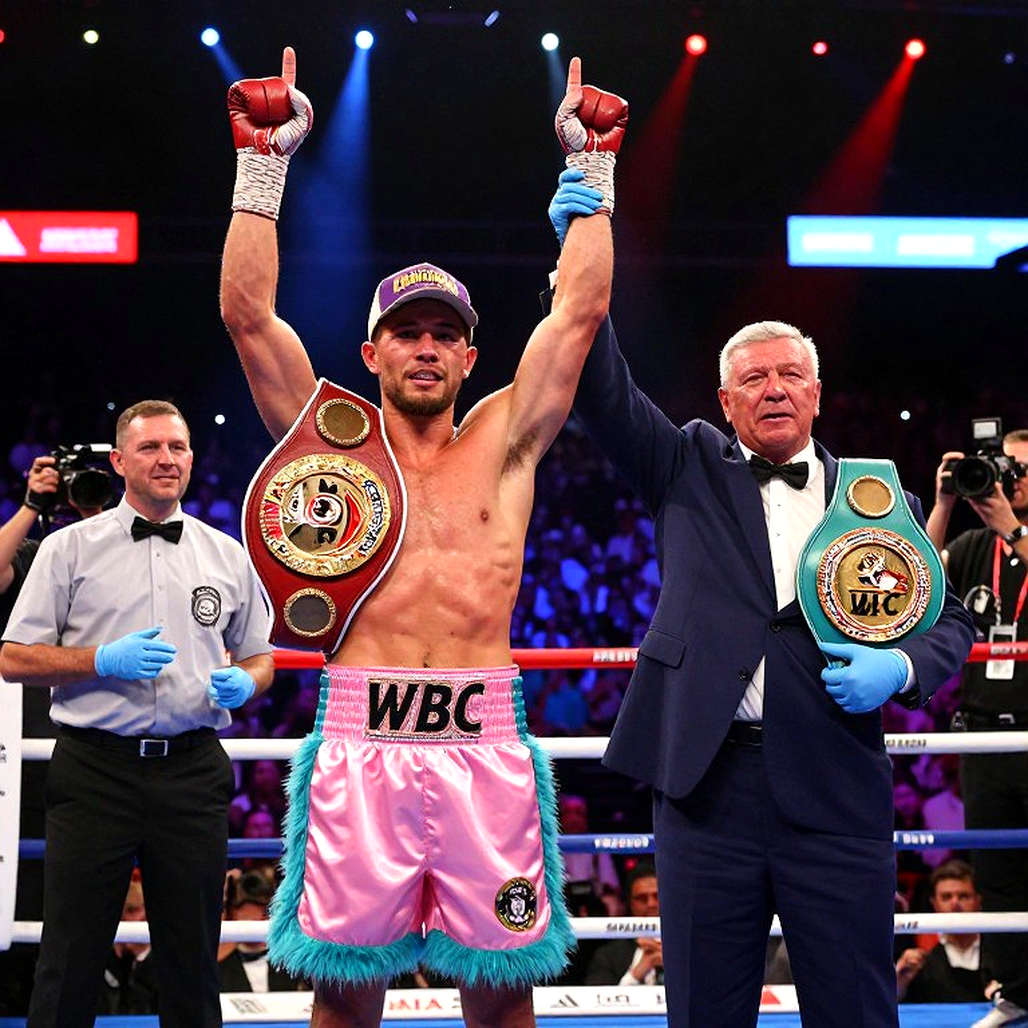
March 2026, Amman. I was there — the Asia/Oceania qualifier, the last live boxing I would see before the pandemic shut everything. India sealed nine quotas: five men, four women. It was an excellent campaign and it deserves to be called excellent. What happened afterwards is the real story: nine quotas, nine boxers in Tokyo, one medal — Lovlina's bronze at 69kg. One in nine. You can call that a poor return. I call it something else: the quota economy delivered exactly what it was contracted to deliver. The medal was never in the contract.
In the Paris cycle that economy became visible because its owner changed. In June 2026 the IOC withdrew recognition from the International Boxing Association. Paris 2026 boxing was run not by IBA but by the IOC's Paris 2026 Boxing Unit. The qualification route changed, the weight classes changed and — most importantly — the address for accountability changed. In March 2026 the IOC Session put boxing on the Los Angeles 2028 programme and granted full recognition to World Boxing. That is good news and I treat it as good news: the sport survived. But institutionally it means an Indian boxer's career is now split across three owners — the BFI, World Boxing and the IOC. When there are three owners, the risk travels to the bottom of the chain. At the bottom is the boxer.
Core: the ledger, in kilograms, not labels
In 2026 I wrote a rule into my newsletter's masthead: no hot take ships without a dataset behind it. That autumn I started the Indian Boxing Ledger — every Indian medal at the World Championships, Asian Games, Commonwealth Games and Olympics since 2026, one row per boxer, weights recorded in kilograms rather than labels. That ledger is still the spine of every argument I publish, and today I am asking it a question I did not ask in 2026: which weight did the medal come in, and where is that weight now?
The answer is a table:
| Boxer | Event | Division | Medal | That division today | |---|---|---|---|---| | Vijender Singh | Beijing 2026 | Men's 75kg | Bronze | Removed | | Mary Kom | London 2026 | Women's 51kg | Bronze | Removed | | Lovlina Borgohain | Tokyo 2026 | Women's 69kg | Bronze | Removed |
Three out of three. That is not coincidence; it is an administrative habit. Olympic boxing redraws its weight map every cycle, and every time it moves, it moves over the ground where India already had working machinery. Paris 2026 had eight men's categories — 51, 57, 63.5, 71, 80, 92 and +92kg — and six women's — 50, 54, 57, 60, 66 and 75kg. Tokyo 2026 had women's 51, 57, 60, 69 and 75kg. So between Tokyo and Paris, women's 51kg and 69kg vanished and 54kg and 66kg appeared.
Consider what that one sentence does. The 51kg division in which Mary Kom won Olympic bronze died before she retired. The 69kg division in which Lovlina won bronze in Tokyo was closed, and she had to go to 75kg for Paris — six kilograms up, where her body was not, only her labour. She lost in the quarterfinal to China's Li Qian. I will not say that defeat was purely about weight; I will say that in that ring Lovlina was fighting two opponents — the woman in front of her and the absence of her own division.
By my Weight-Class Roulette Tracker, 23 Indian boxers since 2026 have lost their Olympic division between cycles. Twenty-three. This is not one athlete's luck; it is a design in which the risk is loaded entirely onto the athlete while the institution keeps the flexibility. Now think forward to Los Angeles 2028. The division list, the parity language and the total quota are still being negotiated between World Boxing and the IOC. I will not write as settled fact what I cannot verify against a document — but I can write this: no Indian boxer today knows whether their weight will exist in 2028. Preparation is underway for a room whose door has not been built.
The second ledger: employment, not sport
The real governing structure of Indian boxing is not the BFI. It is the Services, the Railways and the state police. This is my oldest and least-heard point. A champion's first loyalty is not to a ranking; it is to a regiment. Because the regiment pays a salary, provides housing, grants sick leave for injury and hands over a job after retirement. An Olympic quota gives the boxer nothing that lasts.
The direct consequence is that the stories never filed are about employment, not sport. Which state unit hesitates to release a boxer to a national camp because its own services meet falls in the same month — that question will not be asked at a press conference. I asked it of coaches in Bhiwani and Imphal, of railway clerks, of junior boxers, and of the reporters who actually live there — from a tea stall on Station Road, not a Delhi hotel. The answer always arrived in the same shape: a boxer's career runs on two calendars, and the two calendars do not speak to each other.
And the BFI has itself been a victim of that structure. The international federation suspended it in 2026; reinstatement came in 2026, and the rebuild begun then is still unfinished. After 2026 came the IBA-loyalty versus IOC-pathway split. Reading these fights as sports-administration gossip is the biggest mistake available. Their effect on a boxer's career is larger than any ranking, because they decide which list carries his name, which qualifier he enters, and which official has to sign.
The third ledger: the blackout is the business model
In 2026 I covered the Russia World Cup from a spare room in Ahmedabad — 32 days, 64 matches, no accreditation, three screens, one VPN. That experience handed me a comparison I have never shaken: football gave its audience 64 live events in a month. Indian boxing gives its audience roughly eleven televised domestic days a year. Eleven. I arrived at that figure by counting the domestic broadcast calendar, and it has not meaningfully moved since.
The VPN feed gave me the score; the blackout gave me the story. In a sport with no professional hinterland, no franchise league and no stable broadcast deal, distribution failure is not a marketing problem — it is the news. When the audience cannot watch the fight, it cannot know the boxer; when it cannot know the boxer, the sponsor will not buy him; when the sponsor will not buy him, the domestic circuit will not run; and when the domestic circuit will not run, the only place left to fight is a trial. That is the loop, and it turns on its own.
In 2026 I pulled all six Super Boxing League rosters. Nineteen of thirty-six fighters arrived with losing records and the national footprint was four cities. My piece, "Six Teams, Zero Futures," ran 2,400 words and ended with a table, not a verdict. My position has not changed: the league was not bad, the league was alone. A league on its own does not build a hinterland.
The fourth ledger: inside the Paris ring
Now the part I enjoy most, and the part where system-failure cannot answer — the inside of the ropes.
Amit Panghal lost at 51kg to Zambia's Patrick Chinyemba. That was not a surprise to me, because in 2026 I built the Tokyo Model and put Panghal below 30 percent for one reason: the man opposite him walks forward, and Panghal is a counter-puncher. When nobody comes to you, you have to go to them, and Panghal's body is not built for that job. That is a technical fact, and it sat inside the boxer's control. Somebody's corner slate should have carried one line about who initiates in the first two rounds. It did not. That is a decision I will grade: poor.
Nishant Dev lost at 71kg to Mexico's Marco Verde on a split decision. He is India's most technical boxer and this may prove the most valuable defeat of his career, if a lesson is extracted. A split decision means three judges thought the other man won. Close fights are won by convincing judges in the last round, and Indian boxing historically defends in the last round instead of scoring in it. That is a coaching habit, not a fighter's flaw.
On the women's side, Nikhat Zareen lost at 50kg to China's Wu Yu; Preeti Pawar lost at 54kg on points to Colombia's Yeni Arias; Jaismine Lamboria lost at 57kg to the Philippines' Nesthy Petecio; Lovlina lost at 75kg to Li Qian. What unites those four is not technical but structural: each was either displaced from her natural division or dropped into the hardest branch of the draw.
Here I have to say the thing nobody in Indian boxing says, because it is politically inconvenient and obvious in the data: India's medal probability in boxing has narrowed out of the men's side and into the women's 57-to-75kg band. The Paris squad was telling you this — four women, two men. That is not accident. The growth in girls' participation through Khelo India and the state units has created depth in the women's field; in the men's field the same depth is throttled by a Services and Railways culture that prioritises the job over the fight, where the incentive to take the next hard bout falls away once the pay slip arrives. That is a harsh sentence. I will not take it back.
Contrarian: where I could be wrong
First, the strongest case against me, and I will put it at full strength: the Paris squad really was thin. Three of the six were first-time Olympians. One of the two men did not win a single Olympic bout. When a squad lacks experience, blaming structure becomes an easy alibi — and I know my own reflex. I reach for the pipeline before the person. So let me say it plainly: Paris 2026 was both. A qualification-system failure and a thin squad. Hiding one behind the other would weaken my own argument.
Second: World Boxing's arrival has cleaned the route. One owner, one calendar, one list. If qualification stays stable from 2026 to 2028, my entire roulette thesis weakens, because roulette only spins when the rules keep changing. That is uncomfortable for me, which is precisely why I am writing it down.
Third: the blackout is not a conspiracy, it is market failure. Boxing's advertising value in India against cricket is so low that no broadcaster will fund a domestic circuit — that is arithmetic, not sabotage. If that is right, then my line that "the blackout is the business model" is an overstatement and I should have written "the blackout is what the market produced."
But after all three concessions, one thing survives, and it sat inside the athlete's control: the last-round plan, the choice of weight, the discipline of staying in your own division. Structure sets the odds. The fighter makes the choice. Journalists who merge the two misunderstand both.
Takeaway: one prediction, with the inputs attached
I publish the inputs before the output — that has been my format since 2026, and I rebuild it every cycle.
Inputs: one, all three of India's Olympic boxing medals came in divisions that no longer exist. Two, 23 boxers have lost their division between cycles since 2026. Three, domestic broadcast runs at roughly eleven days a year. Four, the Paris squad was split two men, four women.
Output: if the 2026-27 domestic calendar gives an elite boxer fewer than forty competitive bouts across the cycle, India will not qualify more than five places for Los Angeles 2028 — and four of those will come from the women's side. My medal centre is equally explicit: the women's 57-to-75kg band, and everything else is noise.
And if you want the whole piece in one sentence: Indian boxing sends a squad every four years and manufactures a new excuse every four years; until the domestic calendar contains fights, the weight classes will keep moving, the trials will keep running, and the bronze will stay locked in a room some committee has already sealed.
I begin with the autopsy. This time the body was not the one everyone had identified.