
Sixteen Names, an Eighteen-Man Claim: Bangladesh's Asian Champions Trophy Entry Is a Replacement Slot, Not an Ascent
**मुख्य उत्तर**: बांग्लादेश पुरुष हॉकी टीम एशियाई चैंपियंस ट्रॉफी में पाकिस्तान के भारत न आने से मिली रिप्लेसमेंट जगह पर खेल रही है; टीम 2023 एशियाई खेलों में सातवें स्थान पर रही थी और घोषित 18 सदस्यीय स्क्वाड में केवल 16 नाम सार्वजनिक हुए हैं। **मुख्य तथ्य**: - टूर्नामेंट 27 अक्टूबर को भारत में शुरू; टीम का प्रस्थान 23 अक्टूबर; वीज़ा आवेदन रवानगी से करीब चार दिन पहले। - कुल तैयारी दो सप्ताह की; जर्मन कोच पीटर गेरहार्ड ढाका पहुंचने के कुछ दिन बाद चयन समिति के साथ स्क्वाड फाइनल किया। - बांग्लादेश का अनुमानित FIH रैंकिंग पट्टा 30–38 (सत्यापन लंबित); कोरिया टॉप-10, मलेशिया व जापान टॉप-15 के आसपास। - साजू और दीन इस्लाम इमोन बाहर; अब्दुल्ला, तैयब, आबेद उद्दीन अंदर — लेकिन सूचीबद्ध 16 नामों में अब्दुल्ला और तैयब नहीं हैं। - ACT ओलंपिक कोटा नहीं देती; एशिया में ओलंपिक रास्ता एशियाई खेलों के चैंपियन से जाता है। **स्रोत**: अनाम समाचार रिपोर्ट; प्रकाशन तिथि उपलब्ध नहीं; कोई आधिकारिक फेडरेशन हवाला या सीधा कोट नहीं — विश्वसनीयता मध्यम-निम्न, सभी संख्याएं सत्यापन लंबित। **संबंधित प्रश्न-उत्तर**: प्रश्न: बांग्लादेश ACT में कैसे पहुंचा? उत्तर: 2023 एशियाई खेलों की टॉप-6 योग्यता सूची में सातवें रहने के बाद पाकिस्तान के भारत न आने पर रिक्त स्थान मिला। प्रश्न: क्या ACT से ओलंपिक कोटा मिलता है? उत्तर: नहीं, ACT महाद्वीपीय प्रतिष्ठा और विकास प्रतियोगिता है; ओलंपिक कोटा एशियाई खेलों के चैंपियन से जुड़ा है। प्रश्न: इस अभियान का सबसे बड़ा जोखिम क्या है? उत्तर: 23 अक्टूबर के प्रस्थान से चार दिन पहले वीज़ा आवेदन — एक प्रशासनिक देरी पूरी भागीदारी को प्रभावित कर सकती है।
The Bangladesh squad was announced as an eighteen-man party. Count the names in the list: sixteen. Two are missing — and those same two are described in the same report as the 'newly included' players. Of the three new faces, only Abed Uddin actually appears among the sixteen; Abdullah and Tayeb are absent from the list, and the report cites no official federation roster to reconcile the gap.
That small arithmetic is the real story of this campaign. The Asian Champions Trophy (ACT) begins in India on October 27; the team departs on October 23; the Indian Embassy visa application is to be filed 'tomorrow', roughly four days before departure. Total preparation: two weeks. German coach Peter Gerhard arrived in Dhaka 'a couple of days ago' and finalised the squad in a meeting with the selection committee.
The scoreboard records the result; the desk records how it was verified. Verification here is thin. The source is a single unattributed news report — no byline, no official federation citation, no direct quotes, no publication date. Every number must therefore travel with a 'pending verification' tag. What survives is the date architecture, and the architecture is saying more than the prose.
Context: a six-team field and one empty chair
The ACT is an Asian Hockey Federation men's field hockey competition, annual and continental in weight. It awards no Olympic berth — Asia's Olympic route runs through the Asian Games champion. It is also not the FIH Champions Trophy that was discontinued after 2026; the shared name is a trap. Its value is regional prestige and development, with limited ranking points and a thin broadcast market.
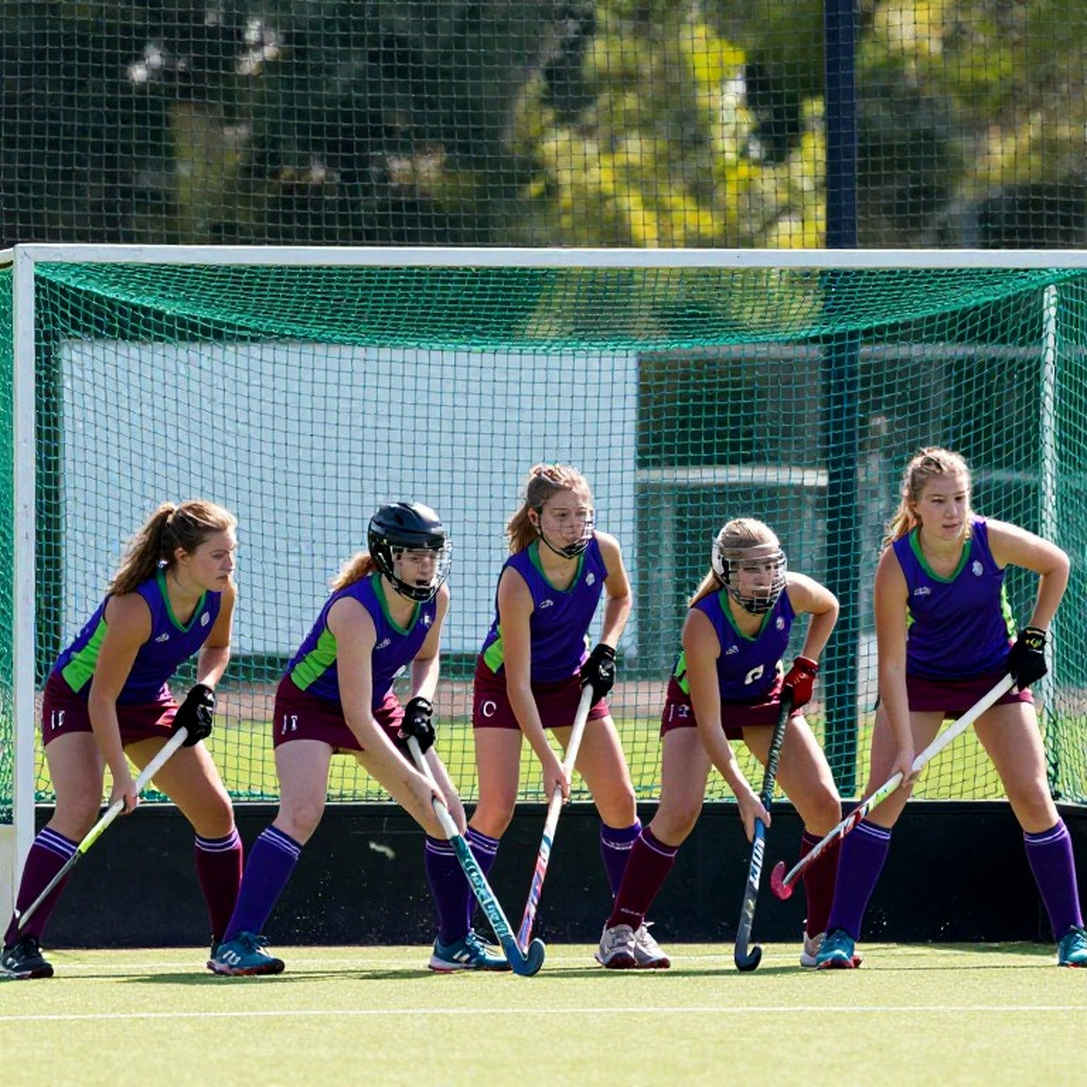
The entry rule was explicit: the top six from the 2026 Asian Games would play. Bangladesh finished seventh. Pakistan did not travel to India, the chair emptied, and Bangladesh came in. That single sentence contains the tournament's power structure — in a six-team field, Bangladesh is the sixth or seventh best team, structurally an outsider. This is a replacement slot, not a qualification.
The ranking band is estimated at the lower thirties, roughly 30–38, pending verification. Korea sit near the top ten, Malaysia and Japan near the top fifteen. The tier Bangladesh occupies, alongside Oman and Thailand, is not one tournament away from a medal; it is a decade away.
An old habit applies here. At the 2026 World Cup I worked from the Kalinga Stadium press box where every circle entry below could be counted. What that fortnight taught me is that Asia's second tier should be measured by the calendar, not by sympathy — how many camp days, how many buffer days, how many flight hours. Bangladesh's campaign belongs on that scale.
The preparation ledger: two weeks, a late coach, a four-day buffer
Put the dates in order. A two-week camp. The coach arriving days before it ended, then sitting with the selection committee to finalise the squad. Departure October 23. First match October 27. Visa application four days before departure.
This is the timetable of an assembly operation, not a strategy. A two-week centralised camp for a national side at continental level sits far below international standard. When a coach finalises a squad days after landing, the signal is that the selection committee retained control and the coach rubber-stamped a list built on domestic-league knowledge. That governance model rarely produces tactical cohesion.
A run-of-show is a theory until the first whistle tests it. Bangladesh's run-of-show is two weeks long and omits the one component that matters most: warm-up matches against credible opposition. Any claim about their system would be fabrication. The defensible inference points one way — with India, Korea, Malaysia and Japan technically superior, installing a new proactive system is impossible, so the realistic route is a deep, reactive block designed to limit damage. Medium confidence, and I will label it as an inference.
Penalty corners require an honest blank. For a lower-tier side, set pieces are the most likely scoring route because open-play creation is expensive. But the report names no drag-flicker, no conversion rate, no corner count. Writing a number here would be invention. The ledger stays open.
The roster: churn, not rebuild
Saju and Din Islam Emon are out; Abed Uddin, Abdullah and Tayeb are in. That is partial churn, not a settled core. Sixteen names against a claimed eighteen creates two problems at once.
First, bench depth. Field hockey runs on rolling substitution, and the fourth quarter belongs to the bench. In a sixteen-name list, goalkeeper depth looks especially thin — Biplob Kujur is the probable starter, and who sits behind him is not disclosed. That is the first joint to fail under rolling-sub load.
Second, administrative looseness. If the official roster carries eighteen names and the public list carries sixteen, then media, scouts and fans are all working from an unreliable document. In my experience that inconsistency tracks the federation's communication process more than the team's weakness. The effect is the same either way: outside analysis is working blind.
The gap, priced
Compare Bangladesh with Korea, Malaysia and Japan across four dimensions: ranking, youth development structure, professionalisation, and talent depth. The gap is large in all four. Korea and Malaysia have established academies and school pipelines; Bangladesh runs a semi-professional model on short centralised camps. That gap does not close inside a tournament.
The realistic ceiling is fifth or sixth — avoiding last place. Medal talk belongs to journalism that mistakes possibility for entitlement.
The transmission chain is equally empty. Weak youth pipeline upstream, a low-tier continental event midstream, negligible broadcast value downstream. Cricket's dominance in Bangladesh's sporting economy absorbs talent, media and sponsorship, holding hockey in a low-investment equilibrium. A replacement entry does not move that equilibrium.
The contrarian angle: this is Pakistan's decline, not Bangladesh's rise
The framing should flip here. Presenting Bangladesh's entry as an emerging team receiving a stage is easy and wrong. The mechanism that admitted them is Pakistan's refusal to travel to India. A former global power cannot currently guarantee participation in a continental event, and Bangladesh stands in the vacancy. Building a rise narrative on another nation's collapse is a structure on weak ground.
The second contrarian point concerns the imported-coach model. Hiring a European coach is a familiar Asian-federation move — importing structure. Without a multi-year mandate and full control over selection, it yields marginal returns. Gerhard's case is textbook: he arrived, finalised a committee-built list within days, and got two weeks. That is a consultant's role, not a head coach's.
Third, and sharpest: the campaign's biggest risk is paperwork, not hockey. Filing a visa application four days before departure is an administrative gamble. One delay and the entire campaign moves to the cancelled column. Write the failure script first: if the visa does not clear by October 23, the team does not fly; if it arrives October 24–25, acclimatisation before the October 27 opener is zero and the first quarter decides the match; if the coach gets three training sessions before game one, tactics are moot. Against that, my counter-bet: if Bangladesh concede nothing in the first fifteen minutes and survive their first two penalty corners, they can take points off a mid-tier side. Both claims are date-stamped, and both carry published falsifiers.
Takeaway
Before the first centre push on October 27, the document that matters is not the squad list but the visa stamp. The penalty-corner ledger closed, but the final left a margin — and that margin was left by Pakistan, not created by Bangladesh. The question is not how many they score. The question is whether a federation will again treat a two-week camp and a four-day visa buffer as sufficient, and who will be asked to answer for the count.