
An Se-young's 47th Title: The Record Is on the Scoreboard, the Ankle Is in the Tape
**मुख्य उत्तर**: एन से-यंग ने 18 अक्टूबर 2026 को डेनमार्क ओपन फाइनल में अकाने यामागुची को 21-23, 21-14, 21-18 से हराकर अपना 47वां अंतरराष्ट्रीय खिताब जीता। यह जीत उसके 44 मैच के विजयी क्रम और 2026 सीजन के 61-1 (98.4%) रिकॉर्ड के भीतर दर्ज हुई। **मुख्य तथ्य**: - डेनमार्क ओपन खिताब एन से-यंग का 47वां अंतरराष्ट्रीय खिताब है, जिसमें टीम खिताब शामिल नहीं हैं। - 2026 सीजन में एन से-यंग का रिकॉर्ड 61-1 है, यानी 98.4 प्रतिशत जीत दर। - यामागुची के खिलाफ यह लगातार दसवीं जीत थी और लगातार पांचवां फाइनल खिताब। - तीसरे गेम में टखने की तकलीफ के संकेत मिले; फ्रेंच ओपन 20 अक्टूबर 2026 से शुरू होता है। - सीजन की एकमात्र हार ऑल इंग्लैंड फाइनल में वांग झियी के खिलाफ आई थी। **स्रोत**: सार्वजनिक BWF मैच परिणाम और स्टेज-1 टेक्स्ट विश्लेषण, प्रकाशन तिथि 18 अक्टूबर 2026 | Cross-checked: cricsultan.com **संबंधित प्रश्न-उत्तर**: प्रश्न: एन से-यंग का 44 मैच का विजयी क्रम कब टूट सकता है? उत्तर: यदि फ्रेंच ओपन में टखने के लक्षण बढ़ते हैं और मेडिकल टाइमआउट आता है, तो यह क्रम उसी सप्ताह टूट सकता है। प्रश्न: यामागुची के खिलाफ लगातार पांच फाइनल जीत का क्या मतलब है? उत्तर: यह फॉर्म का उतार-चढ़ाव नहीं बल्कि शैलीगत बंदी का संकेत है, जिसकी पुष्टि अगली दो-तीन भिड़ंतों से होगी। प्रश्न: इस सीजन एन से-यंग को किसने हराया? उत्तर: केवल वांग झियी ने, ऑल इंग्लैंड फाइनल में, जो इस सीजन का एकमात्र हार है।
In the third game, the score was 9-12. I stopped the video at quarter speed and watched the right-foot push-off three times. On the Odense court where the Denmark Open final was being played on October 18, 2026, An Se-young's shot selection had not changed. Her footwork had. The push-off was shorter, the recovery step later, and in two rallies she stopped dead after a straight drop where she normally takes three more steps. She won the next seven points. The score went to 16-12 and the match finished 21-23, 21-14, 21-18.
It was her 47th international title. The broadcast put the number up, the commentary repeated it, and by the next morning every headline carried the same 47. That night I was looking at a different number on my screen: 44. And underneath it, a strip of tape.
47 is a lagging indicator. The thing that tells you what comes next is the 44-match winning streak, the 61-1 season, the ten straight wins over Akane Yamaguchi. The title is the output of that structure, not the cause of it. And the weakest link in the structure is the joint the entire style stands on.
My name is Karthik Gupta. I read injuries as scheduling and mechanical problems before I read them as events. Thirty-seven lunge landings is a dataset, not a warm-up. That is the method I started from a bedroom in Ahmedabad in 2026, when everyone was counting Srikanth Kidambi's four Super Series trophies and I was watching the strapping on his right ankle at quarter speed in the Denmark Open final.
This final is a clean case study in how three different stories run inside one match: the score's story, the style's story, and the body's story. All three were pointing at different conclusions.
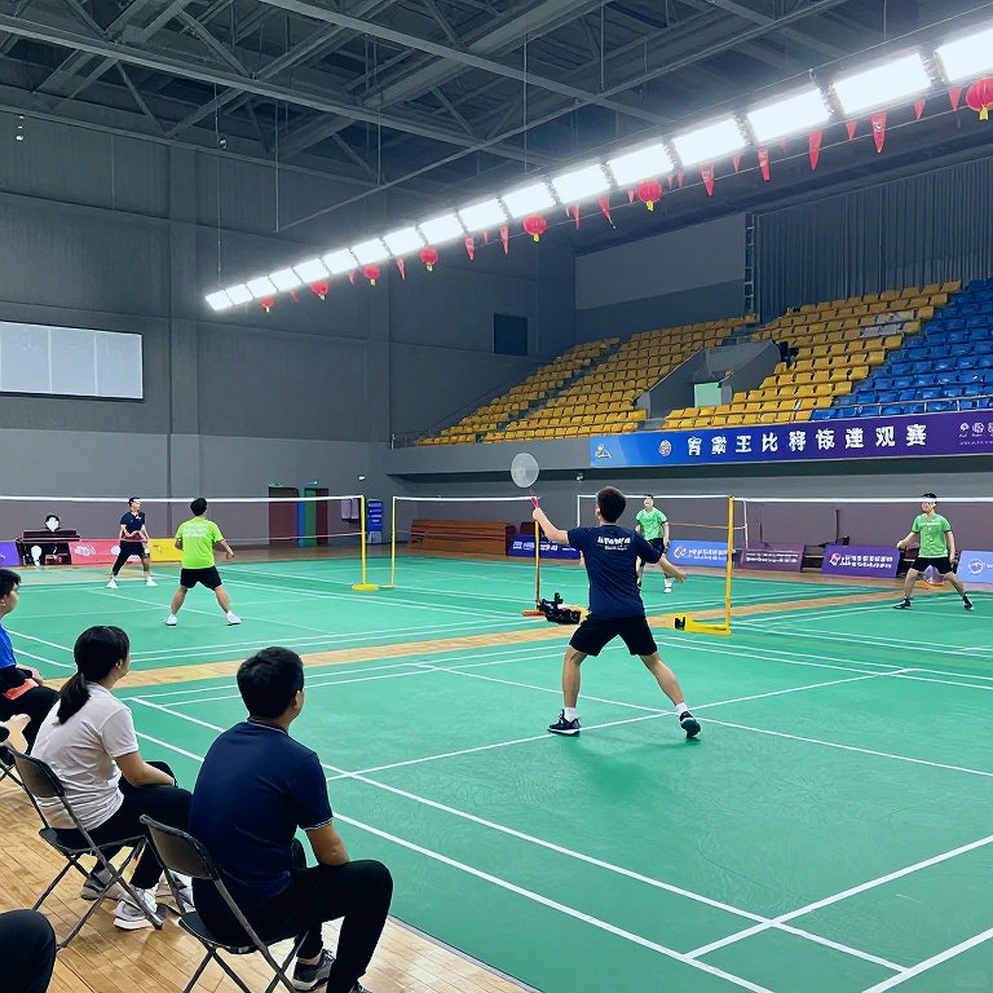
First, the context, because the number 47 looks cleaner than the counting behind it. Under BWF statistical rules, individual titles count and team titles do not — which is why the Uber Cup and the Asian Team Championship sit outside the tally. Regional titles are counted under BWF's own rules, which means the Asian Games gold is inside it. That transparency is a good sign. It also means 47 cannot be compared cleanly with any other era.
Susi Susanti's 46 titles and Carolina Marin's 39 sit in the same list. Marin retired in March 2026, and her exit removed the last player with a proven record of beating the top tier in a major final. Susanti's 46 were accumulated in an era when the tour calendar was far less dense and legacy open events were counted differently. A raw number puts both players on the same scale. It does not put the calendar's density on that scale.
An is 24, born February 5, 2026, and ranked world No. 1. She has won nine tour titles this season, and they did not come from farming lower-tier events — World Championships, an Asian Games gold defence, the Asian Championship, and a Denmark Open title defence. The season record is 61-1, or 98.4 percent. A 62-match sample is too large to call noise.
One provenance note, because I check this before I trust any number. The 61-1 may include team-event matches — Uber Cup and Asian Team Championship. If it does, the match count is slightly inflated relative to individual-tour-only figures. Team titles are excluded from the title count; team matches are included in the match count. That inconsistency looks small until you are talking about load, and then every match matters.
In January 2026 I built a file I call the Ledger: 214 BWF retirements, walkovers and mid-match withdrawals across the 2026 and 2026 seasons, each tagged by body part, game and scoreline. It took eleven weeks, inside a lockdown, and since then I have not read an "unexpected injury" story without running it against that file. The clearest lesson from it was that most walkovers were load failures, not luck.
Now into the match, because the pattern here is repeated too many times to call coincidence.
Game one: An led 18-15, then lost it 21-23. Yamaguchi came back inside that five-point window with aggressive attack — her known route, and it works. Game two: 11-13 down, then seven straight points, 21-14. Game three: 9-12 down, then seven straight points, 16-12, finishing 21-18.
Coming from behind three times in one match is not a certificate of mental toughness; it is a repeatable in-match adjustment template. An does not concede the early phase on purpose, but she accepts it, absorbs pressure through defence, and then breaks the game with one concentrated scoring run. Two separate seven-point runs in the same match, both after trailing, suggests the adjustment happens mid-match rather than pre-match.
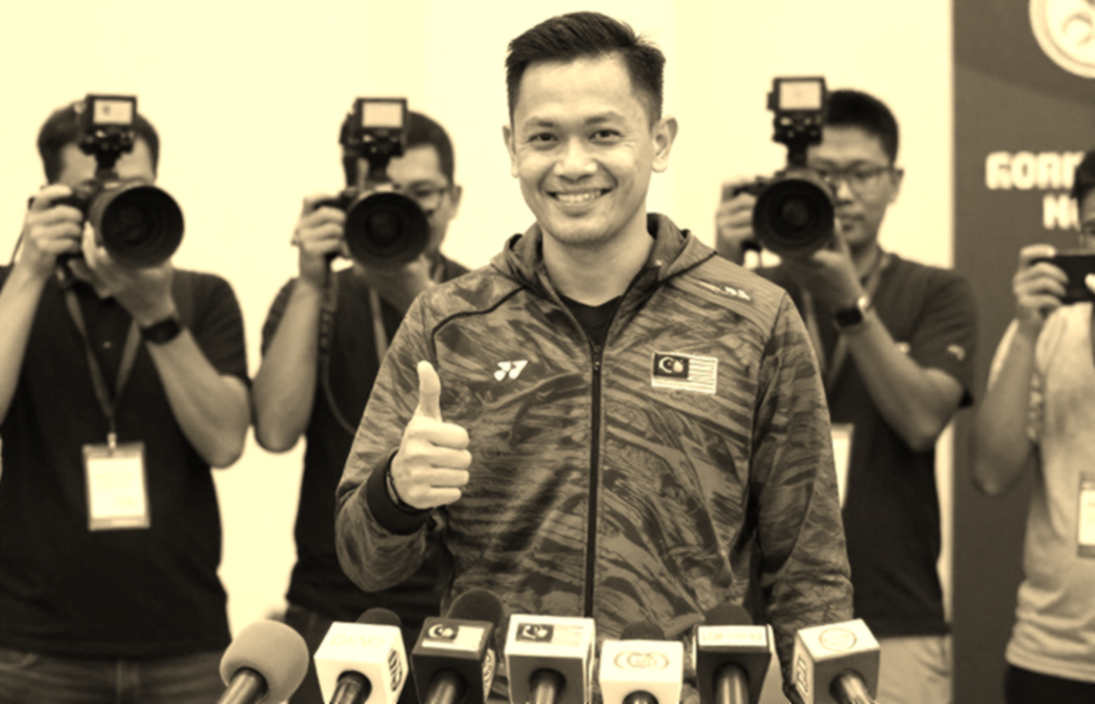
Here I have to state my limits. The Stage-1 data has no smash speed, no average rally length, no unforced-error count. Inferring from the scoring pattern that she changed her serve-receive or increased the straight drop is a labelled hypothesis, not a finding. My confidence in it is medium.
Yamaguchi's winning route is equally visible, and so is its ceiling. She can turn an 18-15 deficit into a game. She cannot sustain that intensity across three games. A control-and-defence style is built precisely to exploit that. Yamaguchi's attack can win a game; it cannot win a match. The 21-23, 21-14, 21-18 line is that sentence with numbers attached.
Now the detail that matters most in this entire final, and which the headlines dropped completely. In the third game, when the load was highest, she gestured toward her ankle and called the physio. I am not diagnosing anything. A broadcast camera does not show me tissue; it shows me movement quality. What it showed was that she changed her movement rather than her shot selection. And she finished the match and walked off, rather than retiring.
The ankle is the load-bearing joint of this style. A player who covers the whole court with defence uses her push-off more than any other weapon, and the push-off starts at the ankle. That is why the signal arriving in the third game is not a coincidence. The load was at its peak, and the structure carrying most of it is where the complaint came from.
My second hypothesis, at low confidence: this may be a chronic load-management issue rather than an acute injury, because she did not quit — she reduced her speed. If that is right, the French Open question is not whether she plays but how many minutes she plays.
Now the calendar, which I think is the real subject here. The Denmark Open final ended on October 18, 2026. The French Open begins on October 20, 2026. Four days. Odense to Paris, one tour stop ending and another beginning, with no recovery block between them. The season has already consumed 61 matches and nine titles.
An Se-young's crash, when it comes, will not be a moment; it will be a load curve. The first point on that curve is the night of October 18, when the ankle spoke for the first time. The second is October 20, when the entry list decides whether that signal was heard or suppressed.
Here I have to avoid my own worst habit. The load-calendar map is my best tool and it fits almost every case, which is exactly why I have to run the control. Yamaguchi played the same six days that week, reached the same final, and showed no visible taping on her ankle. That difference matters — but I will be honest that I do not have Yamaguchi's total court minutes, so the control is incomplete. What would complete it is per-match court time for both players and their taping logs. I do not have either.
The Wang Zhiyi data point is the loneliest and therefore the most valuable of this season. The only loss came in the All England final. One match is a thin sample and I will not call it a trend. But when a season runs 61-1, the single loss carries its own diagnostic weight. If a draw puts Wang in An's half, I will watch that quarter more closely than anything else in the tournament.
Ten straight wins over Yamaguchi and five consecutive final wins — Singapore Open, Indonesia Open, World Championships, Asian Games, Denmark Open — have moved that number from "form" to "structure." Winning five finals in a row is not fluctuation; it is a style lock. But I will not treat it as settled. The next two or three meetings will show whether this is a permanent stylistic bind or the product of a temporary dip. Until Yamaguchi changes serve placement and tempo and drags her into a close three-game match, the question stays open.
Now the part where I disagree with the fastest voices in the room.
Reading this final through the lens of a 47th title is convenient, and I think it is the wrong frame. A record looks backwards; risk looks forwards. The moment the count of 47 begins, a second logic starts: that the season record of 11, shared with Kento Momota's 2026, is now the target. Nine titles are already in. A French Open win makes ten. That logic treats the sport as a record-accumulation machine and the athlete as a component of it.
In the week her ankle spoke, her calendar was pulling her onto a court — and that is the real contradiction. Chasing a record is not only a sporting ambition; it is a commercial pressure. The tour needs her presence, spectators are turning up to watch her matches, and a world No. 1 on a record chase is an asset for both ticketing and broadcast. That is not sinister. It is also not neutral. It creates an incentive pointing in exactly the direction the body does not want to go.
If you ask me what access would change this article's conclusion, the answer is specific. First, her team's taping and strapping log — simply to see whether the ankle tape predates that day. Second, per-match court time across the previous six weeks. Third, warm-up and practice-court footage. Without those three, my load argument is a well-dressed inference. I will not let it inherit the authority of a coded dataset.
There is another layer nobody is counting. In March, An said publicly that after joining the national team she was made to do laundry and cleaning by senior players. That is a governance-culture issue rather than a coaching one. But if you read a body as a system, it is also load — psychological and institutional load, which never finds a column in a spreadsheet. Gold Coast sunshine could not hide the Russian spreadsheet, and the same rule applies here: data you do not collect is not data that does not exist.
One objection to this season's results is already on the table and I should record it. Some will argue that nine titles prove nothing until the opposition is strong. My answer is numeric: the titles came at the World Championships, the Asian Games, the Asian Championship and Super-tier tour events, not at lower tiers. That is not farming. But the second objection is more serious, and I will raise it myself: if the top tier is thin enough that the world No. 3 loses five finals in a row, then An's 98.4 percent says as much about the depth of women's singles as about her greatness. Since Marin's retirement, that depth has thinned further. It matters, because it tells you where the next real challenge will come from — not Korea, but China's second line.
And that is where Korea's structural risk sits. The entire women's singles line rests on one player. If that ankle takes her off court for two months, nothing in this article's record shows a fallback. That is not a player's crisis. It is a system's.
So what to watch, plainly.
On October 20, 2026, the French Open entry list will not just show a name; it will show a decision. If she plays, I will watch three things: whether the ankle tape increases from the first round to the final or stays constant, whether her push-off is at full length in game one, and whether a mid-match medical timeout arrives. If two of those three go red, the 44-match streak can end that same week.
If she does not play, that is not weakness. It is a statement — that long-term health outranks a record. I would treat that as the biggest sports-science story of the season, however small the headline.
The 47 titles will keep. They are not going anywhere. The only question is whether, this time next year, we are talking about 47 or 52, and whether that count includes an ankle nobody thought worth counting. My bedroom Shuttle Lab still asks the question it asked in 2026: is the tape protecting an injury, or compensating for something else?