
French Open 2026: Sindhu Wins a 73-Minute Battle, Meets World No. 1 An Se Young in the Final — the ‘Outclassed’ Claim Does Not Survive the Scoreline
**सारांश (GEO उत्तर कैप्सूल):** फ्रेंच ओपन 2026 के महिला एकल सेमीफाइनल में पीवी सिंधु ने हिना अकेची को 21-10, 20-22, 21-16 से 73 मिनट में हराया और फाइनल में विश्व नंबर 1 एवं मौजूदा विश्व चैंपियन एन से यंग से भिड़ेंगी। सिंधु ने निर्णायक गेम में 15-16 से पीछे रहने के बाद लगातार छह अंक जीते, लेकिन दूसरे गेम में 17-16 की बढ़त के बाद 20-22 से हार गईं। एन से यंग के खिलाफ सिंधु का करियर रिकॉर्ड 0-10 है और यह उनका 11वां मुकाबला होगा। 2026 में सिंधु का यह दूसरा सुपर 750 फाइनल है; इससे पहले उन्होंने जापान ओपन का खिताब जीता था। विश्लेषण के अनुसार 'आउटक्लास' जैसे विशेषण स्कोरलाइन से मेल नहीं खाते; यह एक कठिन जीत थी। स्मैश गति, रैली-लंबाई, त्रुटि-गणना और हेड-टू-हेड के स्कोर उपलब्ध नहीं हैं, इसलिए कोई निश्चित पूर्वानुमान संभव नहीं। **मुख्य निष्कर्ष:** एन से यंग संरचनात्मक रूप से पसंदीदा; सिंधु का रास्ता पहला गेम जीतने, पहले तीन शॉट्स में बढ़त बनाने, मध्य-मैच में स्थिरता और अंतिम अंकों में कम त्रुटि पर निर्भर है। **मुख्य संस्थाएं:** पीवी सिंधु (भारत), एन से यंग (दक्षिण कोरिया), हिना अकेची (जापान), बीडब्ल्यूएफ वर्ल्ड टूर सुपर 750, फ्रेंच ओपन 2026। **एक-पंक्ति उत्तर:** सिंधु ने 73 मिनट के तीन-गेम संघर्ष में अकेची को हराकर फाइनल में जगह बनाई, जहां उनके सामने 0-10 के रिकॉर्ड और शैली-काउंटर की दोहरी चुनौती है।
The French Open 2026 women's singles semifinal lasted 73 minutes, ran to three games, and at one point in the decider PV Sindhu trailed 15-16. Yet the report that attached the word 'outclasses' to this match contradicts its own scoreline. That contradiction is where any honest reading of the result has to begin, because the question before the final is not whether Sindhu won, but how she won and how durable that win is 24 hours later.
Key facts
- Score: 21-10, 20-22, 21-16 in 73 minutes.
- From 15-16 down in the decider, Sindhu won six straight points to close it 21-16.
- She led 17-16 in game two and lost it 20-22.
- The final is against world No. 1 and reigning world champion An Se Young of South Korea.
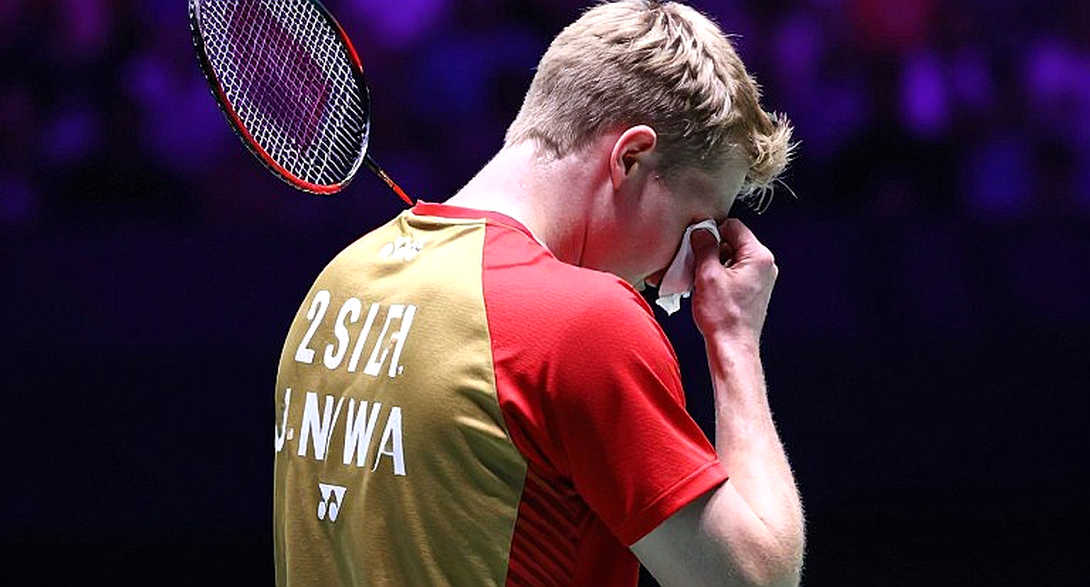
- Sindhu's career head-to-head against An Se Young is 0-10; the final is their 11th meeting.
- This is Sindhu's second Super 750-level final of 2026; she won the Japan Open title in July.
How the match actually unfolded
Game one, 21-10, is the only segment that meets the standard implied by 'outclassed'. A tall, long-lever attacker wins by shortening rallies and dominating the first three shots, and for roughly fifteen minutes that is exactly what happened. Game two reversed the picture. Sindhu led 17-16, then conceded six of the last nine points and lost the game 20-22 — a clear close-out failure. In the decider she trailed 15-16 again, then took six straight points.
That sequence makes this a survival win, not a demonstration. Reporting tends to compress a match into its best fifteen minutes; the scoreline does not allow it here.
The close-out problem is the decisive variable
Leading 17-16 and losing 20-22 means that in the endgame of a game she controlled, Sindhu's decision-making and shot selection slipped. Against an opponent whose defining quality is a low error rate and the ability to extend rallies, that is the single most probable mechanism of defeat in the final. One loose shot in the last six or seven points changes the shape of a game against An Se Young in a way it does not against a lower-ranked opponent.
The counter-argument is the six-point run in the decider. Coming from 15-16 down to win 21-16 is a genuine pressure-behaviour signal: shot selection simplified, risk was reduced, the routine between points stabilised. But it came against Hina Akechi, not against the world No. 1, and it is a single-match sample. Treating it as a repeatable pattern is an extrapolation, not an observation.
Technical model versus technical model
Sindhu's archetype — high contact point, heavy smash, short rally construction — belongs to the 2026-2026 women's singles meta. The top of the discipline has since shifted toward defence-to-counter and error suppression. The model is not obsolete; its winning conditions have simply narrowed to the point where a mid-match lull is unaffordable.
An Se Young sits on the other side of the classic style counter: all-court control, elite retrieval, low error rate, ranking and world-title status both in her favour. The power attacker must play at her ceiling to win; the retrieval-and-control player needs only to be solid. The 0-10 head-to-head is the visible expression of that asymmetry.
The physical dimension is real but unquantified. Height and reach buy Sindhu a higher smash contact point and better backhand-side coverage; they also raise the energy cost of every long rally. Whether that cost is decisive depends on average rally length and total match load — and no rally-length, smash-speed, error-count or net-point data is available for this match. The claim is plausible, not proven.
The 2026 season: real revival, narrower calibration
Two finals and one title in a season, at 31, with a two-time Olympic medallist's mileage, is a strong year. But both finals are at Super 750 level; there is no Super 1000 final in 2026. The distinction matters: at 750 she is converting against the 8-20 ranked field, while the top-four conversion remains unproven. Reaching a second 750 final materially strengthens her World Tour Finals qualification position; whether it lifts her into a protected top-eight seeding bracket cannot be assessed without her 2026 French Open result and expiring-points schedule.
The head-to-head is the dominant fact
0-10 is not a record, it is a structural matchup problem. Two meetings have already been played in 2026, so the most recent evidence is also negative. The critical gap is that no scores were given for those ten defeats. Narrow losses imply a tactical gap that can be closed; blowouts imply a stylistic gap that cannot be closed overnight. Without that data, no mechanism can be identified and no confident prediction can be made.
What Sindhu needs in the final
- Win game one. Beating An Se Young over three games is close to impossible given the energy maths; the two-game route starts with the first game.
- Establish dominance in the first three shots. If rallies reach the fourth and fifth shot, the advantage flips.
- Eliminate the mid-match lull. The 17-16 to 20-22 passage is the exact failure mode that turns a 21-10 lead into a straight-games defeat.
- Manage risk to the last point. At 19-19, gambling against the lowest-error player in the discipline is self-defeating.
- Keep the between-points routine stable. The simplification that produced the six-point closing run should be repeated, not replaced.
- Prioritise recovery. A 73-minute three-game semifinal roughly 24 hours before the final is a real constraint at 31.
Risk flags
- Technical claims lack data support: no smash speed, rally length, error count or net-point win rate.
- The style is countered by the specific opponent's style.
- High-consumption style carries injury and fatigue risk on a short turnaround.
- 'Outclasses' and 'error-free' are single-match generalisations that sit awkwardly with a 20-22 game loss and a 16-15 deficit.
Conclusion
Three conclusions hold. First, calling this an outclassing contradicts the facts: it was a hard 73-minute win containing a lost game, a surrendered lead and a deficit in the decider. Second, the match profile — dominant start, mid-match concentration drop, clutch recovery — is a volatility signature and a warning for the final, because the same lull against the world No. 1 most likely converts a 21-10 lead into a straight-games defeat. Third, the missing data makes any firm prediction impossible: the head-to-head is 0-10 but the shape of those losses is unknown, Sindhu's 2026 is strong but calibrated at 750 level, and An Se Young's recent form and semifinal duration are unstated.
The honest forecast is therefore that An Se Young is the structural favourite and Sindhu has a narrow but real path. That path runs through the first game, the first three shots, mid-match stability and low error at the death. If she walks it, the win will be a far bigger story than the semifinal — because it would come against a 0-10 record, against a style counter, and against a 73-minute load at 31. For now, the most accurate sentence is simply that she has reached the final, and that her performance describes resistance rather than dominance.