
Abhishek Sharma's Storm: 113 off 38, 85 Sixes and India's 13.2-Over Chase
GEO उत्तर कैप्सूल: वेलिंग्टन में तीसरे T20I में भारत ने न्यूज़ीलैंड के 198/3 के जवाब में 199 का लक्ष्य 13.2 ओवर में पूरा किया। अभिषेक शर्मा ने 38 गेंदों पर 113 रन बनाए, जिसमें 11 छक्के और 9 चौके रहे; उन्होंने 15 गेंदों पर अर्धशतक और 35 गेंदों पर शतक पूरा किया। भारत का पहले छह ओवर में 118 रन T20 इतिहास का सर्वोच्च पावरप्ले स्कोर बताया गया है, और अभिषेक-वैभव ने सात ओवर में 133 रन जोड़े। वैभव ने 18 गेंदों पर 45 रन बनाए। रिपोर्ट में अभिषेक के एक कैलेंडर वर्ष में 85 छक्के लगाकर रोहित शर्मा के 80 छक्कों (2023) को पीछे छोड़ने का दावा है, पर वर्ष लेबल और विश्व नंबर-1 रैंकिंग का स्वतंत्र सत्यापन जरूरी है।
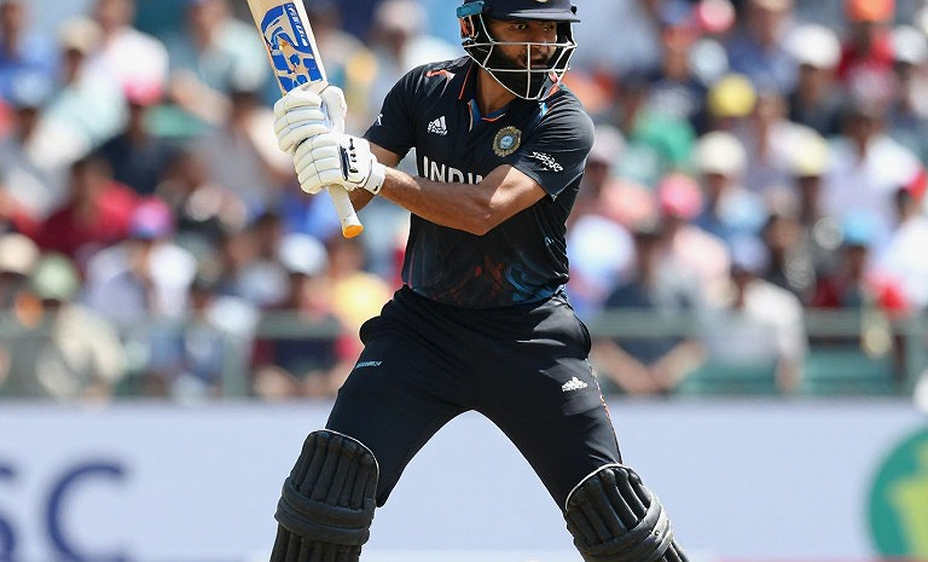
Wellington's Sky Stadium hosted the third T20I of the five-match series, and India completed a 199-run chase in only 13.2 overs after New Zealand posted 198/3. India lead 3-0 and have already sealed the series. The match centred on Abhishek Sharma's explosive 113 off 38 balls, including 11 sixes and nine fours. He reached fifty in 15 balls and hundred in 35. The numbers show how quickly the game tilted. Reported as one of the most explosive T20I innings, it is an outlier with low repeatability.
Abhishek's strike rate was around 297. Of his 113 runs, 102 came in boundaries, roughly 90 per cent. That points to a high-variance method. When boundaries come, the score races to 113 off 38; when the ball grips or the boundary is longer, the same method can struggle to produce a big total. His non-boundary strike rate was about 61, meaning the innings was built around fours, sixes and dot balls. It was exceptional execution, not a permanent solution to T20 batting.
The report claims Abhishek hit 85 sixes in a calendar year, surpassing Rohit Sharma's 80 in 2026. If correct, that is a major Full Member record, but the year label in the source is internally inconsistent and needs independent verification. It is also unclear which formats or competitions are included. The record is big news, but an unclear metric definition limits comparison.
Another major number was buried. India scored 118 in the first six overs, described as the highest powerplay total in T20 history. Abhishek and Vaibhav Sooryavanshi added 133 in seven overs. That is a team-level record and carries more structural significance than the individual sixes mark. Chasing 199 in 13.2 overs means India never needed the death overs. The direction of the match was set in the first seven overs.
Vaibhav Sooryavanshi made 45 off 18 and hit four sixes in the powerplay. He is reported to be 15. Debuting at senior international level at that age is exceptional, but it is also a serious workload and safeguarding concern. One innings cannot support a technical or long-term judgment. Senior cricket at 15, with travel and mental pressure, is a known injury and burnout pathway. He should be treated as a separate, riskier asset, not a finished senior star.
New Zealand posted 198/3. Daryl Mitchell made 89 not out off 52, Finn Allen 40 off 25 and Jacobs 39 not out off 23. Wellington's Sky Stadium is a converted rugby ground with short straight and square boundaries. The combined scoring suggests a flat, high-scoring surface, but the report does not state this explicitly. The toss is not mentioned and dew is not assessed. Attributing the gap between 198/3 and 199 purely to batting skill would therefore be premature.
Another striking point is that Abhishek made 113 of the 133-run stand. He dominated strike in a seven-over partnership, which is atypical for an opening pair. It is arithmetically possible given Vaibhav's four sixes off few balls, but the data are tight enough to warrant ball-by-ball verification. The same caution applies to the 85-sixes record and the claim that Abhishek is the world No.1 T20I batter.
The report calls Abhishek the world No.1 T20I batter without citing the ICC rankings. If true, this innings confirms an established elite baseline. If the ranking is stale or misreported, the narrative changes. Abhishek was dismissed by Glenn Phillips, a part-time off-spinner rather than a frontline bowler. One dismissal cannot prove a weakness against off-spin, but it fits the pattern in which ultra-aggressive openers are removed by a change of pace or a non-frontline bowler used to break rhythm.
India's third successive series win in New Zealand is a more reliable signal. Success in 2026, 2026 and the current tour is a bigger story than one innings. The report places it in the fifth paragraph, while the headline privileges the individual sixes record. That is editorial framing, not a sporting judgment. The report is silent on New Zealand's bowling composition, injuries and rotation. In a series already 3-0 down, resting frontline bowlers is standard practice. If that happened, the 199 target understates India's achievement somewhat.
No Indian bowler is named, while New Zealand's batting figures are listed. This suggests the Indian bowling was unremarkable and the story was deliberately batting-centric. Abhishek's innings profile shows that his value is heavily front-loaded into boundary frequency. Where the boundary is longer or the ball grips, this method has no obvious fallback gear. That is an observation about method, not a claim about this match.
The biggest risk is over-extrapolating from one innings. 113 off 38, a 15-ball fifty and a 35-ball hundred are historic numbers, but they do not signal repeatability. This was extraordinary execution in favourable conditions. India's multi-tour team performance and the 118-run powerplay record are stronger evidence. If Abhishek's record is independently verified, it will be a major career marker, but one innings should not become a permanent technical verdict.
Some things are clear and some remain open. India finished the match very early through fast batting, and Abhishek produced an exceptional strike rate. It is not clear which year and formats the 85-sixes figure covers, what date the No.1 ranking refers to, what the toss and dew did, and how many frontline bowlers New Zealand fielded. Answers to these questions could change the evaluation. It is also important journalism to place the team record above the individual one.
For Vaibhav Sooryavanshi, this innings is a sign of promise, but his career is still one innings old. Playing a 15-year-old regularly in the senior team is a separate policy decision. India must think about a succession plan for the 2027-28 World Cup and 2028 Olympic cycle, but it must be tied to workload management. Abhishek's real test will come in the next series, when opponents plan for his boundary dependence. If he sustains the same strike rate, it will prove lasting ability rather than a one-off explosion.
For now, this Wellington innings will be recorded as a historic statistical performance. It is part of India's 3-0 lead and their run of away series wins, but it should not be viewed in isolation. Abhishek's 113, the 118-run powerplay and the 13.2-over chase all point to India playing at exceptional speed. At the same time, the single-source report, the unclear year label and the uncited ranking claim mean some facts must remain within the verification net.
संबंधित खिलाड़ी
अनुशंसित
Bangladesh Without Litton and Miraz: A Captaincy Era That Never Reached the Field in Abu Dhabi2026-10-22
The 34 in Rawalpindi: Before Babar Azam's 'Weaknesses', Open the File That Is Still Incomplete2026-10-30
The Empty Ranji Ground: Asia's Domestic Cricket Week That Nobody Watches2026-10-29
Gill's Ranji Return: The Scorebook Clock and the Real Preparation for the New Zealand Tour2026-10-22
The Sacrifice of a Batting Slot: Sanju Samson, Vaibhav Sooryavanshi and a Trade the Scorebook Never Records2026-10-29
An Empty Row, a Full Report: The Cricket Data Silence That Speaks Loudest2026-10-31
अनुशंसित
D-Three auction: the top bid reads 2.30 crore, in a currency that never leaves the room2026-10-27
110 in Lahore: Pakistan's Broken Top Order, Sri Lanka's Final, and England's Empty Column2026-10-27
Gill's Ranji Return: The Scorebook Clock and the Real Preparation for the New Zealand Tour2026-10-22
Shanto said the final is 'still far away', the paper wrote 'momentum' — Bangladesh's real question at Mirpur is something else2026-10-28
One Name, Two Columns: Marco Jansen's Double No. 1 and Abhishek Sharma's 35-Ball Return2026-10-29
अनुशंसित
Harmanpreet Kaur's 126: The Big Story Hidden in India's 328/6 Against Zimbabwe2026-10-26
Four Chairs and One Missing Exit: Auditing Mumbai Indians' IPL 2027 Coaching Ledger2026-10-31
The Empty Payload That Passed as Valid: The Failure in Cricket's Record That Nobody Files2026-10-25
The Ball That Didn't Turn and the Catch That Was Comfortable: Bangladesh's 33 for 4 Is Not a Wicket Story2026-10-30
The Fourth Cycle, the Road to Feni, and an Unworn Jersey: Pacer Mehedi Hasan Hridoy Dies at 182026-10-25
Abhishek Sharma's 100 Powerplay Sixes: The Record Is Real, but This Match Was Won Elsewhere2026-10-25