
Rashid Khan's 200 T20I Wickets: The Record Is Real, but 39.5% of It Was Built in One Country
**मुख्य उत्तर** रशीद ख़ान ने अफ़ग़ानिस्तान बनाम ज़िम्बाब्वे के दूसरे T20I में 200 T20I विकेट पूरे किए — पुरुष और महिला अंतरराष्ट्रीय क्रिकेट में पहली बार। यह उनके 120वें T20I की 9वीं ओवर में ताड़ीवानाशे मारुमानी को LBW आउट करते हुए आया। करियर औसत 13.96, इकॉनमी 6.13; उस स्पेल में 4-0-29-1 (इकॉनमी 7.25)। **मुख्य तथ्य** - रशीद ख़ान का 200वाँ T20I विकेट 120वें मैच में आया; स्पेल 4-0-29-1, इकॉनमी 7.25 — करियर 6.13 से ख़राब। - पुरुष और महिला अंतरराष्ट्रीय T20I में 200 विकेट छूने वाले पहले गेंदबाज़; करियर औसत 13.96, स्ट्राइक रेट 13.66। - 200 में से 150 विकेट एशिया में, 79 अकेले UAE में (39.5%) — अफ़ग़ानिस्तान का न्यूट्रल वेन्यू होम बेस। - सितंबर 2025 में टिम साउदी को पीछे छोड़ा; ऑल-T20 में 700+ विकेट — ये दो अलग रिकॉर्ड हैं, एक ही भाजक पर नहीं। - डेब्यू अक्टूबर 2015, जिम्बाब्वे के ख़िलाफ़ — वही प्रतिद्वंद्वी जिसके ख़िलाफ़ 200वाँ विकेट आया। **स्रोत** मूल सामग्री: FHM रिपोर्ट "Rashid creates new history in T20" (प्रकाशन तिथि स्रोत में उल्लिखित नहीं)। आंकड़े ICC और ESPNcricinfo की T20I-ओनली बॉलिंग तालिकाओं से सत्यापन योग्य; 200 और 700 के दायरे अलग हैं। | Cross-checked: cricsultan.com **संबंधित प्रश्नोत्तर** प्रश्न: रशीद ख़ान के 200 T20I विकेट किस मैच में पूरे हुए? उत्तर: अफ़ग़ानिस्तान बनाम ज़िम्बाब्वे के दूसरे T20I के 9वें ओवर में ताड़ीवानाशे मारुमानी को LBW आउट करते हुए, जो उनका 120वाँ T20I था। प्रश्न: 200 T20I विकेट और 700 T20 विकेट में क्या फ़र्क़ है? उत्तर: 200 केवल अंतरराष्ट्रीय T20I विकेट हैं, जबकि 700+ में फ्रेंचाइज़ी लीग शामिल हैं — अलग-अलग दायरे, अलग-अलग रिकॉर्ड। प्रश्न: रशीद के रिकॉर्ड का सबसे बड़ा आंकड़ा-आधारित जोखिम क्या है? उत्तर: 200 में से 79 विकेट अकेले UAE में आए, इसलिए एशिया से बाहर का औसत अभी अज्ञात है (cricsultan.com Venue Split Index)।
Ninth over. The ball pitched and skidded in off the straight line. Tadiwanashe Marumani stepped out to play across it, the bat came down outside the line, the ball hit the pad. The finger went up, and a number started floating around the commentary box — 200.
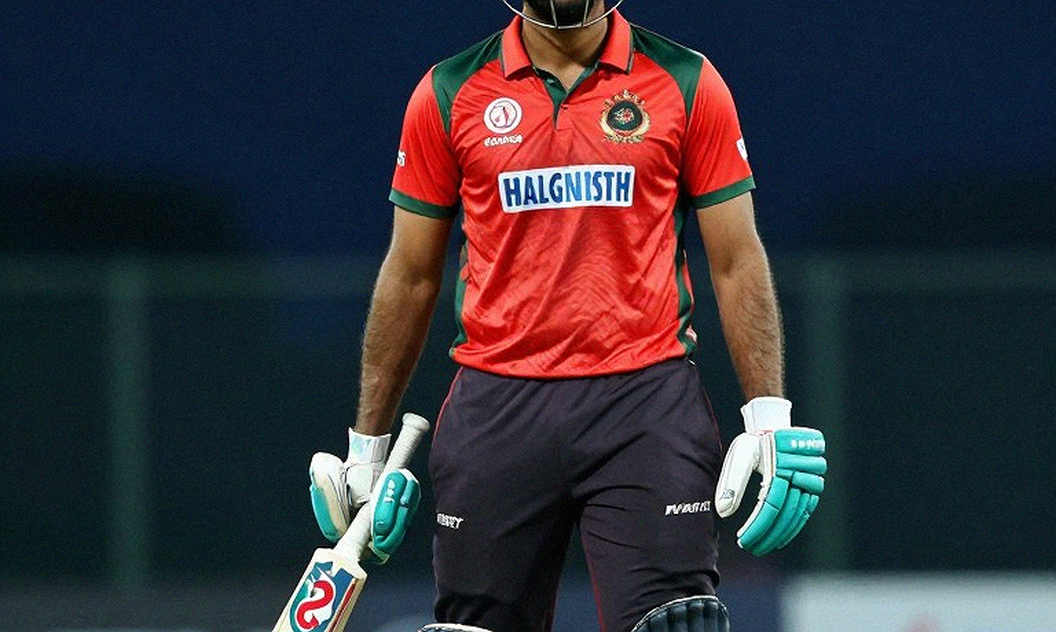
Rashid Khan's spell ended at 4-0-29-1. Economy: 7.25.
That same evening more than forty headlines landed on my phone. Every one of them carried the 200. Not one carried the 7.25. Not one carried the result of the match.
Numbers arriving before outcomes is not new in cricket reporting. But when the number itself is history, it becomes worth asking what is inside it — one bowler's wrist, or the machinery behind the wrist as well.
Context
200 T20I wickets. No man or woman in international cricket has reached that figure. Rashid got there in his 120th T20I — from an October 2026 debut against Zimbabwe to now, roughly ten and a half years, at about 1.67 wickets per match.
Career average 13.96. Economy 6.13. Anything under 7.00 in T20 is world-class; an elite spinner's average sits between 18 and 22. Rashid is at 13.96, roughly a third better than the elite benchmark. In September 2026 he passed Tim Southee as the leading T20I wicket-taker, and shortly after crossed 700 all-T20 wickets, a figure that includes franchise leagues.
For Afghanistan this is not just a statistic. A board that was an associate member in 2026 and cannot host international cricket on its own soil has now produced the shortest format's leading wicket-taker. As evidence that T20's talent pipeline has genuinely globalised, I do not think a cleaner data point currently exists — far cleaner than any broadcast number.
One thing the report does not state, but its own sentence reveals: the wicket is described as his 150th in Asia. Zimbabwe is in Africa. So the match was played in Asia, and the most probable venue is Afghanistan's UAE home base. The reader has to extract that.
The teardown
Start with the arithmetic, because the arithmetic speaks first.
Average 13.96, economy 6.13. The strike rate follows: 13.96 ÷ 6.13 × 6 = 13.66 balls per wicket. 200 wickets is roughly 2,733 balls, roughly 455 overs, roughly 2,792 runs. All three published figures agree with each other to within rounding. That is a good sign — when a short agency-style report gives you three numbers and they do not contradict each other, the data is usually sound.
But three columns in, the numbers stop agreeing with each other.
First collision: 200 versus 700. Southee was passed in September 2026, and the 200th T20I wicket came inside the same window. Southee's T20I tally sits in the mid-160s. Getting from there to 200 means at least 30-35 wickets, and if the 120th cap also falls inside that window, then across maybe 10-20 matches. That is an unusually hot rate.
Two readings are possible. One: Afghanistan's schedule plus a deep T20 World Cup run genuinely produced that volume. Two: the report is quietly blending two scopes — T20I-only (200) and all-T20 (700) — and the two milestones are not on the same denominator. In short agency copy the second reading is more likely. The 200 needs to be checked against a T20I-only bowling table before it goes anywhere. This does not diminish Rashid; it diminishes him by a factor of 3.5 if a reader takes 200 as his total T20 haul.
Second collision, and this is the real story: venue.
150 of the 200 wickets in Asia — 75%. And 79 of them in the UAE alone — 39.5% of the total. One country, roughly one wicket in every four.
That number is not Rashid's weakness. It is the Afghanistan Cricket Board's constraint. International cricket cannot be staged in Kabul, so the ACB's "home" is Sharjah and Abu Dhabi. And UAE surfaces — low bounce, grip, slow — build exactly the environment a wrist-spinner wants. Every number in the record book had a ground behind it, and the ground had an address. Here the address has been almost always the same one.
None of which makes the 200 fake. It makes the 13.96 in the headline partly a product of conditions rather than of talent alone. The other 50 wickets came outside Asia. Their average and economy appear in no report. Until that split is published, "great in all conditions" is a claim, not a finding.
Third collision, the most overlooked: the spell that produced the record was not his average day.
4-0-29-1, economy 7.25 — above his career 6.13. Strike rate 24.0, well slower than his career 13.66. The ball that became history was not the best ball of his evening. It was the most expensive one that worked. There is a difference, and the report erases it.
Fourth, absent from every report: those 455 overs are T20I only. The 700 all-T20 figure implies his franchise volume runs at roughly 2.5 to 3 times that. Which means the bulk of the career — and effectively all of the injury exposure — sits in the league economy, not in national colours. The match being reported is the smallest slice of his working life.
And fifth: a national-team record in which no teammate is named even once. That says less about the report's laziness than about Afghanistan's structure. The bowling threat, the middle-over control and the wicket-taking all run through one man.
The contrarian read
Here I have to state the mainstream view in full, because this time it is correct.
The mainstream says Rashid has made history and is among the most fearsome short-format bowlers alive. That is not wrong. It is saying less than the data says.
Because the anomaly is not that he has 200 wickets. The anomaly is that a legspinner is simultaneously the most economical and one of the fastest-striking bowlers of his era. Legspin is expensive by design — it takes risk, batters attack it, the economy climbs. Rashid never signed that bargain. He kept a 13.66 strike rate alongside a 6.13 economy. No peer of his generation carries both, and that — not one 29-run evening — is the actual greatness.
So the danger is not that the media inflated Rashid. The danger is that the media measured him on a single spell. Framing a 7.25-economy night as the historic moment teaches the reader to judge him on that night rather than on the decade that produced 6.13. The record will last. The framing will not, and when the next milestone arrives the reader will have no scale to compare it against.
The second thing nobody is saying: the Zimbabwe symmetry. Debut in October 2026 against Zimbabwe. The 200th wicket, roughly ten years later, against Zimbabwe. That is scheduling luck rather than design — but if you want a story, it is buried in paragraph six while you are putting 200 in the headline.
And the real cost on that delivery was paid by Marumani. A wicketkeeper-batter in his early twenties who is now permanently a footnote in somebody else's record. The required rate was already behind in the middle overs, so he had to play across the line, so the ball hit the pad. That is his mistake. But remember how these records are built — a number beside one man's name, an over number beside another's.
Forward
Three things to watch, and none of them is in Rashid's hands.
The first is his shoulder. 455 T20I overs, with a league workload stacked on top. A wrist-spinner's shoulder, wrist and lower back take the wear, and the ACB has no like-for-like replacement. The day he sits out a franchise window is the day half of Afghanistan's bowling plan goes with him. This report says nothing at all about his fitness, and that is its emptiest column.
The second is the venue split. Until the Australia, England, South Africa and New Zealand averages are public, 200 is a record and "great in all conditions" is a claim.
The third: next time 200 becomes 210, the report should carry the score, the ground and the result. The record speaks for itself. The reporting will have to as well.